
ウクレレの弾き方
 著者: ジョナス
ウクレレをストロークするには、ネックとボディの接合部のすぐあたりで、人差し指の爪を使って4本の弦すべてを横に下へ撫でるように弾く。その際、腕全体ではなく、手首をリラックスさせて動かすようにする。同じ指の肉厚な部分を使って上向きにストロークする。それが自然にできるようになったら、「アイランド・ストローク」のようなパターンを加えてみよう。
Strumming is what turns chords into a song and it is simpler than it looks. The whole technique comes down to three things: a relaxed wrist, the right spot on the strings and a steady pattern. Here is how to do all three, then eighteen patterns to practice, each one with arrows you can play back.
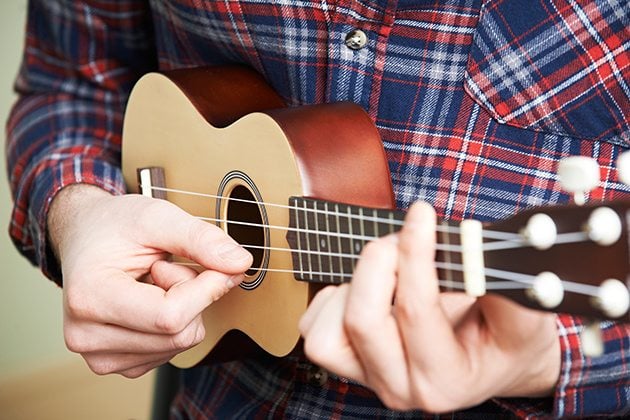
ウクレレのストロークの基本
Start out with the basic hand position, which is a loose fist. Strum with the index finger of your right hand, fingernail side down. When you strum down you should be hitting the strings with your nail. When you are strumming up, with the fleshy tip of your finger. It is important to use your wrist rather than your whole hand. Using your whole hand gets tiring very quickly.
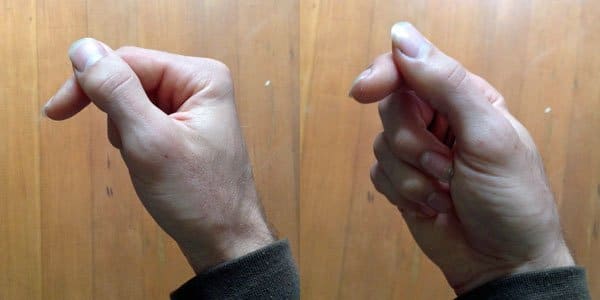
When I started playing the ukulele I did it in a different way. I put the tip of my thumb and index finger together as if I were holding a plectrum. I strummed down with the nail of the index finger and up with the tip of the thumb. Maybe that is because I had a guitar background, but I found it an easier way to strum in the beginning. You also want to make sure that you strum on the correct spot. Strumming too close to the bridge or too high on the neck will make a dim sound.
I have found that the best place to strum the ukulele is different on every instrument, but it is around the area where the neck meets the body (see the red zone below).
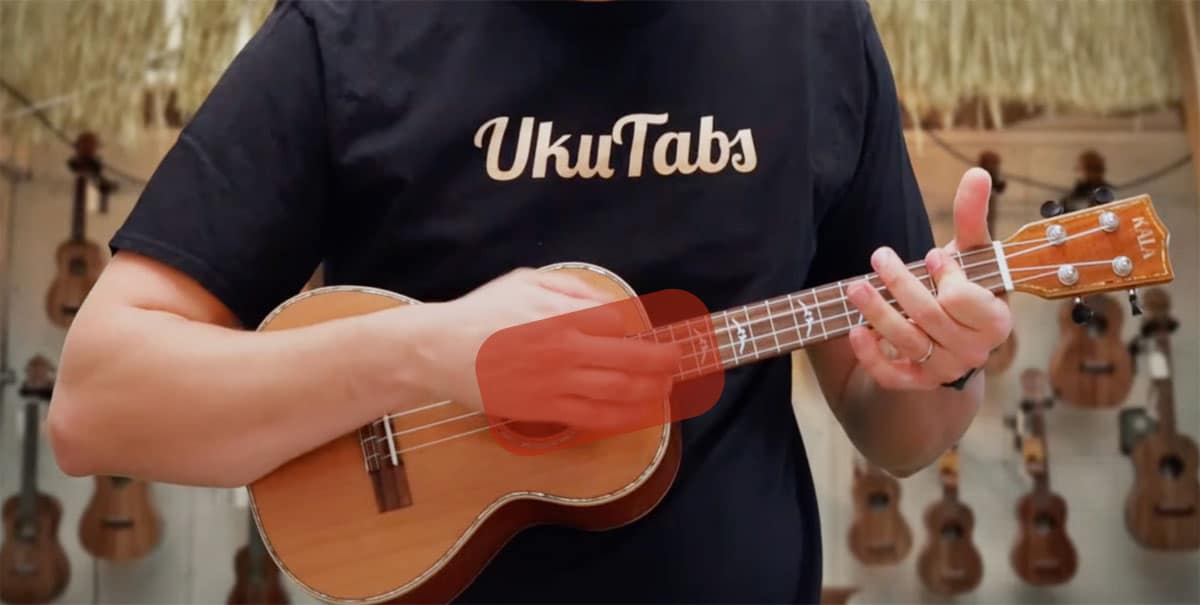
Practice strumming either way by simply going up and down. Once you have mastered that, go on to the advanced section. And once your strum runs on autopilot you can start singing over it. Here is how to sing and play at once.
上級
Once the basic up-and-down feels comfortable, you can start shaping a rhythm. Every song has its own strumming pattern and you build one by keeping the same steady up-and-down motion but skipping the strings on certain strokes. For example, try down, up, miss, down: keep your hand moving the whole time, but only let it touch the strings on the strokes you want to hear. Practice slowly, ideally with a metronome around 60 beats per minute. Only speed up once the pattern is even. Keeping your hand moving on the skipped strokes is what holds your timing together.
ストローク記法
Strumming patterns are written as a short row of letters showing which way your hand moves on each beat. I do not publish the exact strumming for an individual copyrighted song, but the general patterns and notation below work across thousands of them. Here is what each symbol means.
- d:ダウンストローク
- u:アップストローク
- – : pause or missed strum, meaning you move your hand up or down without hitting the strings. These give you the timing of the strums.
- x : a chnk. You strum down and follow through so the underside of your hand lands on the strings, creating a “chnk” sound.
- (d) or (u) : a muted down or up strum. You strum as normal but with your fretting fingers resting on the strings to stop them reverberating. It sounds like a chnk but you can do it in either direction.
- D or U : capitalized letters mean the strum is emphasized, so give it a bit more welly.
ストロークパターン
| # | パターン | 適している |
|---|---|---|
| 初心者向けのストローク | ||
| 1 | d d d d | 最初のストローク(すべてダウンストローク) |
| 2 | d u d u | ビートごとに上下する |
| 4/4拍子 | ||
| 3 | d – d u – u d – | 至る所で見られる4/4拍子のストローク |
| 4 | d – d u – u d u | 定番のアイランド・ストラム |
| 5 | d – d – d u d uinform | 運転 4/4 |
| 6 | d – d u d u d u | 賑やかで明るい 4/4 |
| ハーフ・バー(1小節につき2回コードが変わる) | ||
| 7 | d – d u | 速いコードチェンジ |
| 8 | d u x u | 塊が入ったハーフバー |
| 2小節(コードチェンジがゆっくり) | ||
| 9 | d – d u – u d u | 2小節ごとにコードが変わる場合 |
| 強調 | ||
| 10 | d u d U d u d U | アップビートなリズムを強調する |
| 11 | d u x u d u x u | ファンキーでボリューム感がある |
| レゲエ | ||
| 12 | – d – d – d – d | 一風変わった |
| 13 | – – d u – – d – | シンコペーションの効いたレゲエ |
| 3/4のワルツ拍子 | ||
| 14 | d – d u d – | 3拍子の曲 |
| 15 | d – d u d u | 3ビートの曲、より賑やかな |
| 6/8 time | ||
| 16 | d – – d – u | Rocking, lullaby feel |
| 17 | d – u d – u | Flowing 6/8 |
| One strum per bar | ||
| 18 | d – – – | Slow ballads, let it ring |
There is no single correct strumming pattern for a song the way there is a correct chord. Plenty of patterns can fit and learning to pick one by ear is a skill in itself. The table above lists the most common ones, simplest first. Every pattern below shows the arrows and has a play button. Most have a recorded sample too. Brand new? Get the two starter strums steady before anything else. Try a few against your song, keep whichever feels right and once you are comfortable you can invent your own.
初心者向けのストローク
ストロークはまったくの初心者か?まずはこの2つをしっかりとマスターしてから、以下のパターンに進もう。
Pattern 1: all downs (d d d d)
最初のストローク:各拍で1回ずつダウンストロークする。安定したリズムが肝心なので、弾きながら「1、2、3、4」と声に出して数えよう。
Songs that use it on UkuTabs
Pattern 2: down-up eighths (d u d u)
ダウンストロークの合間にアップストロークを挟むことで、手が常に上下に動き続けるようにする。これが、以下に挙げるほぼすべてのパターンの基礎となっている。
Songs that use it on UkuTabs
4/4拍子のストロークパターン
最も一般的な拍子だ。曲に合わせて「1、2、3、4」と数えてみて、リズムが合うなら、これらを試してみよう。
Pattern 3: everywhere 4/4 (d – d u – u d –)
Skips the third down-strum for a gentle syncopated lift. Simple, but it turns up everywhere, which is how it got the name.
Songs that use it on UkuTabs
- Glen Hansard and Markéta Irglová – Falling Slowly
- The Muppets – Rainbow Connection
- ベン・E・キング – 『スタンド・バイ・ミー』
Pattern 4: island strum (d – d u – u d u)
The classic island strum: pattern 3 with an extra up-strum at the end. The go-to for a huge number of songs and the most used pattern on UkuTabs by a wide margin.
Songs that use it on UkuTabs
Pattern 5: driving 4/4 (d – d – d u d u)
安定感があり、力強いリズム感で、小節の後半はより動きが活発だ。
Songs that use it on UkuTabs
Pattern 6: busy upbeat 4/4 (d – d u d u d u)
一度動き出せばほぼ一定のリズムで上下し続けるため、テンポが速くアップテンポな曲に合う。
Songs that use it on UkuTabs
ハーフバーのパターン
1小節に2回コードが変わる曲の場合。
Pattern 7: half-bar (d – d u)
A short half-bar strum for songs where the chord changes quickly. You play it twice per bar, once for each chord.
Songs that use it on UkuTabs
- Halsey – Without Me
- Melanie Martinez – Tag, You’re It
- Trevor Daniel – Past Life (feat. Selena Gomez)
Pattern 8: half-bar chunk (d u x u)
半小節のストロークに「x」と記されたチャンクを加え、パーカッシブで少しファンキーな雰囲気を演出する。
Songs that use it on UkuTabs
2本線のパターン
コードの変化がゆっくりな曲向けだ。これにより、1つのパターンを2小節にわたって展開できる。
Pattern 9: two-bar relaxed (d – d u – u d u)
The island strum stretched over two bars instead of one, so each chord gets twice as long. Useful for slow ballads where the chords barely move.
This one is a shaping trick rather than a pattern in its own right, so no song on UkuTabs is tagged with it. Take any slow song that uses pattern 4 and give each chord two bars instead of one.
強調
ストロークは同じだが、特定のビートでより強く弾くことで、異なるグルーヴが生まれる。大文字の「U」は、より力強いアップストロークを表す。
Pattern 10: upbeat emphasis (d u d U d u d U)
Leans on the up-strums for a bouncy, lifted feel, good for big singalongs. The capital U is where you dig in.
Songs that use it on UkuTabs
- ザ・ファウンデーションズ – 『Build Me Up Buttercup』
- ニール・ダイアモンド – スウィート・キャロライン
- アメリカン・オーサーズ – 『Best Day of My Life』
Pattern 11: funky chunky (d u x u d u x u)
The chunk groove from pattern 8 carried across two bars, for a funky, percussive feel. It suits anything built on a tight rhythm part.
Songs that use it on UkuTabs
レゲエのギターの弾き語り
レゲエでは、「ワン」ではなくオフビートを強調する。ダッシュが付いている場合は、その拍を飛ばして手を動かし続ける。
Pattern 12: reggae offbeat (– d – d – d – d)
Pure off-beat: you only strum on the “and” of each beat, which is the foundation of a reggae feel.
Songs that use it on UkuTabs
Pattern 13: syncopated reggae (– – d u – – d –)
A syncopated reggae strum that accents the two and the four. Common in reggaeton and Latin pop as well as reggae itself.
Songs that use it on UkuTabs
3/4拍子
4拍子ではなく3拍子で数える曲のために。
Pattern 14: waltz (d – d u d –)
3/4拍子のシンプルなストローク。3つずつ数える曲向けだ。
Songs that use it on UkuTabs
Pattern 15: busy waltz (d – d u d u)
アップストロークを増やした、よりテンポの速い3/4ストロークだ。
Songs that use it on UkuTabs
- The Beatles – Lucy in the Sky With Diamonds
- Édith Piaf – La Foule
- Bo Burnham – Welcome To The Internet
6/8 time
Some songs count in six rather than four, with a swaying, rocking feel underneath. Count “one two three four five six” evenly and lean on the one and the four. These two patterns are written across all six beats rather than in bars of four.
Pattern 16: 6/8 lilt (d – – d – u)
Two strums per bar with a lift on the last beat, which gives 6/8 songs their rocking, lullaby feel. This is the one to reach for whenever a ballad refuses to sit in four.
Songs that use it on UkuTabs
Pattern 17: 6/8 flowing (d – u d – u)
The same six-beat count but with an up-strum closing each half, so it flows rather than rocks. Good for songs that need to keep moving underneath a slow vocal.
Songs that use it on UkuTabs
One strum per bar
Sometimes the right answer is barely strumming at all. On slow, spacious songs a single stroke per chord leaves room for the voice. Adding more just gets in the way.
Pattern 18: whole-bar ballad (d – – –)
One down-strum per bar, left to ring. Count the other three beats in your head and let the chord breathe. It sounds like nothing until you try it under a slow vocal. Then it sounds exactly right.
Songs that use it on UkuTabs
- Billie Eilish – Happier Than Ever
- Harry Styles – Sign Of The Times
- Billie Eilish – Lovely (feat. Khalid)
ウクレレのストロークに関するよくある質問
ウクレレのストロークパターンで一番簡単なものは何か?
The simplest is one down-strum on each beat, the “all downs” strum (pattern 1 above). It builds your sense of timing and works for slow or beginner songs. Once that feels steady, add an up-strum between each down to get the down-up strum.
アイランド・ストラムはどのように弾くのか?
It is the most popular and most versatile uke strum. Using the symbols above, the pattern is d – d u – u d u, which you can say out loud as “down, down-up, up-down-up”. It is pattern 4 above, with the arrows and a sample you can play.
ストロークする手はどのように位置づければよいのか。
Make your strumming hand into a loose fist and hold it in front of the center of your chest, pointing toward your opposite shoulder. Strum from the wrist and let your thumb steady your strumming finger for extra support.
ウクレレはどこを弾けばいいのだろうか?
If you strum too close to the bridge it sounds tinny and the strings have little give. The sweet spot on soprano and concert ukuleles is around the point where the neck meets the body. On tenors it sits a little closer to the bridge.
正しいストロークのテクニックとは何か。
Use your wrist rather than your whole arm or you will tire quickly. On the way down, hit the strings with your nail. On the way up, hit them with the fleshy tip of the same finger.
How do I know which strumming pattern a song uses?
スイング・ストラムやシャッフル・ストラムとは何か。
スイングのリズムでは、ダウンストロークの持続時間がアップストロークの約2倍になる。これにより、ハワイアンやジャズ、ブルースなどでよく使われる、リラックスした弾むようなリズムが生まれる。これにより、単純なアップダウンストロークの音が、はるかに興味深いものになる。
チャンキングとは何か?
Chunking adds a percussive beat to your strum. As you strum down, lightly slap the strings with the side or underside of your hand so they click instead of ring. It is sometimes called muted strumming and it is the x in the notation above.
デッド・ストラムとは何か?
デッド・ストラムも打楽器のようなクリック音だが、これはフレットを押さえる手を使って作るものだ。指をすべての弦に軽く乗せて音が鳴らないようにし、それからストロークすると、ミュートされた「チャック」という音が鳴る。
これらのストロークパターンをすべて覚える必要があるのか?
いいえ。アイランド・ストラムなど、汎用性の高いパターンを3~5つ覚えれば、ほぼどんな曲でも弾けるようになる。特定の曲で必要になった場合にのみ、さらにパターンを増やせばよい。
さあ、曲に合わせてギターを弾いてみよう
Pick a song you know, get the island strum going and keep your hand moving even through the chord changes. Count On Me is about the friendliest place to start and its own page suggests that exact strum. There are thousands more in the easy ukulele songs list. Look up shapes in the free chord library and when you are ready, the fingerpicking guide is the natural next step. Feel free to contact me whenever you need more information about strumming.
Really helpful. I find strumming the hardest thing playing the uke
jk, but this was super helpful, Thanks!
I thought that the chords and moving my fingers would be the hardest thing for me but once you get that down it becomes muscle memory. Strumming is the hardest thing about the ukulele definitely
i am still having some trouble strumming up, i don’t know how to position my hand.
how to do the chnk
what about this / ?
Thank you! I was unsure on how to strum before but this was really helpful <3
Does anyone know any good song that use the hawaiian strum…Ive been wanting to practice that
Waww! finally 🙂 since I started learning ukulele (without any background in music) I have being jumping from one tutorial to the other and getting frustrated because of the lack of strumming instructions. This guide helped me greatly. Thanks a lot!
Thank you so much! These Strumming patterns helped a lot
I’ve been playing ukulele for around 3 years now and I have a really odd strumming pattern. I use my entire hand, so for a down I hit it with all of my nails and and for an up i hit the upper skin of my thumb and slide onto the nail.
I actually don’t know if that’s okay or not, but it works nonetheless.
I’m so glad I found this. Thanks especially for the little audio clips of the strumms.
TQVM fir this informative ibformation. 🙂
how do i sign-up for newsletter?
Really helpful. Thanks!
How do I fingerpick 😭
How do you do d u u d d?
Just use Middle finger if comfortable and do simple and common pattern of D D U U D U used in most ukulele songs
the e chord is still kind of hard for me tho
i fond struming the hardist