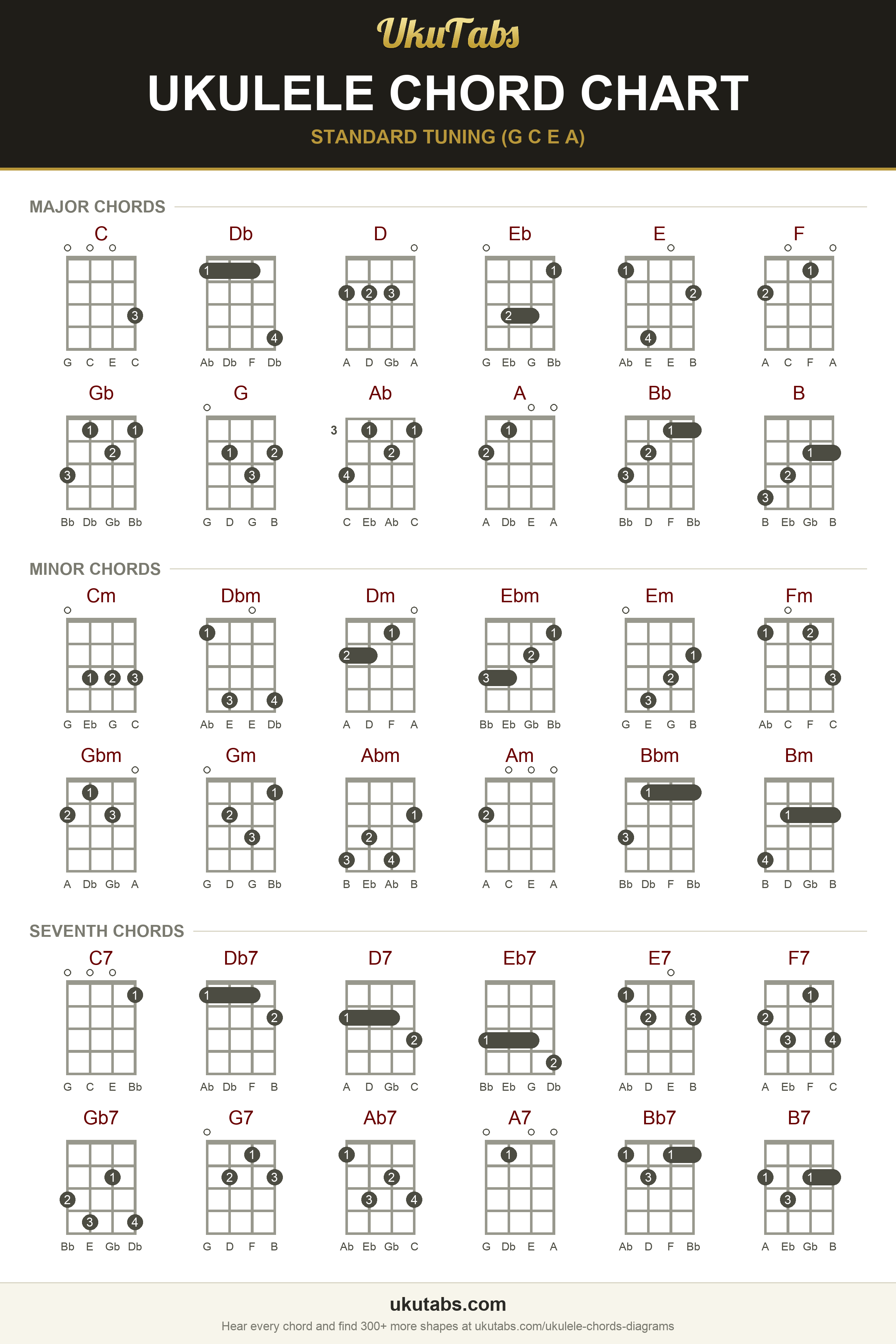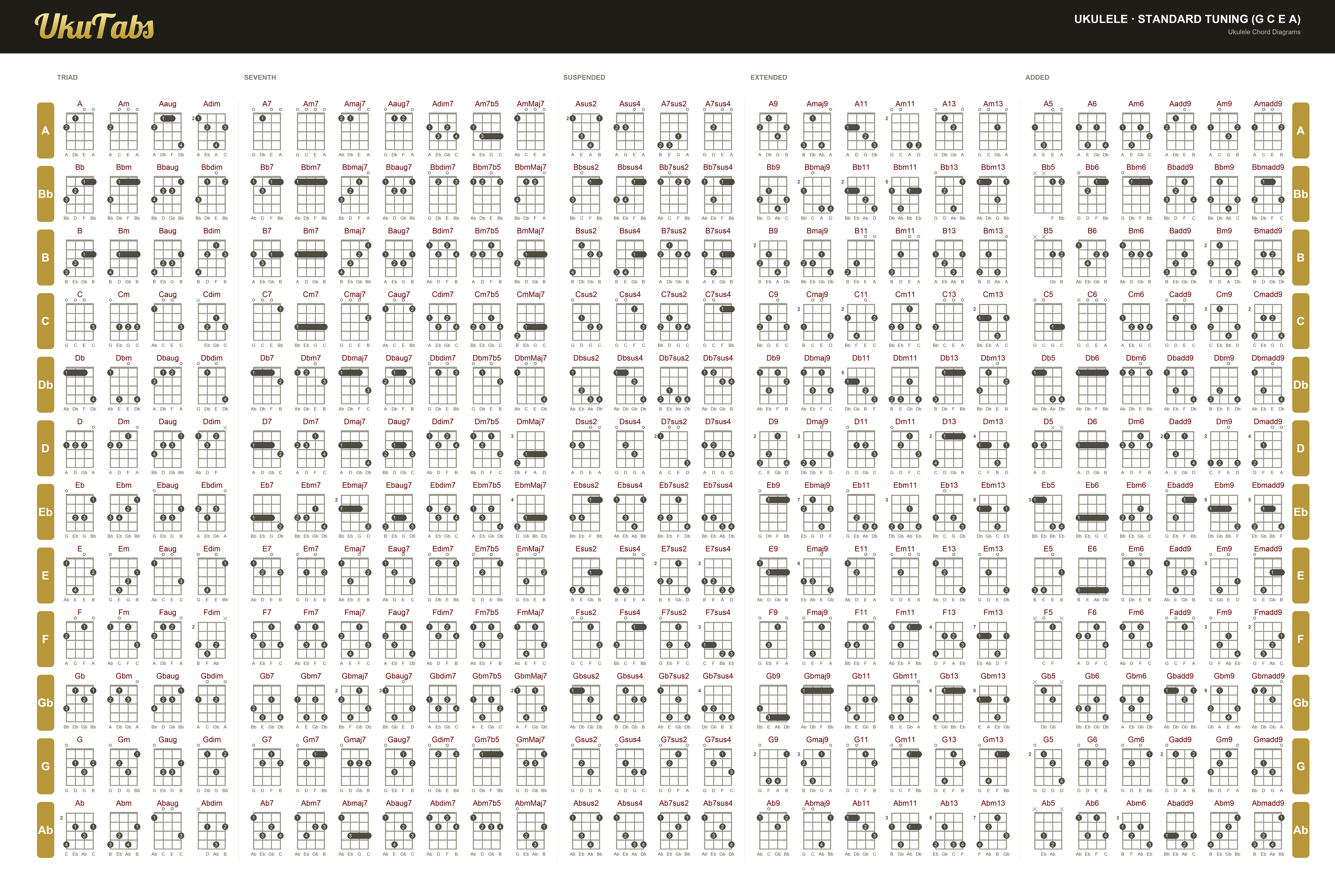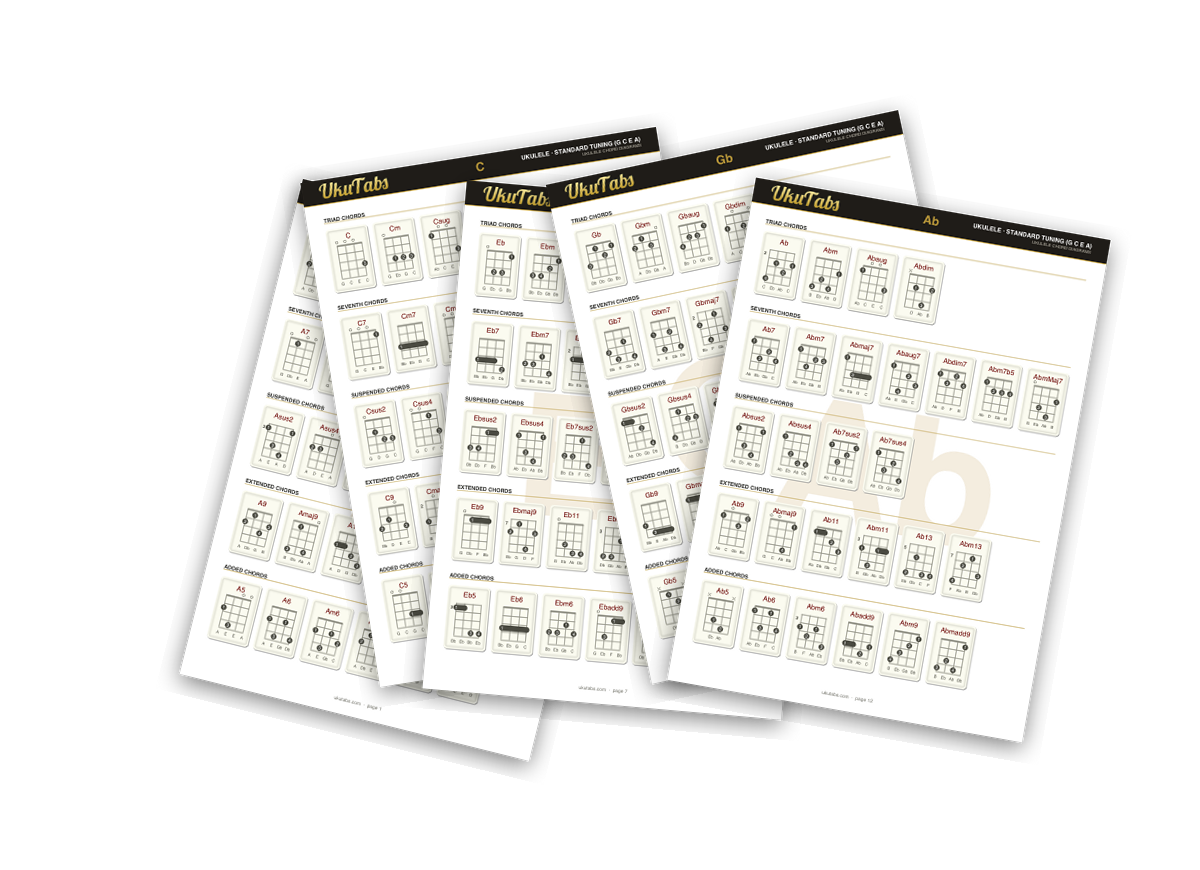
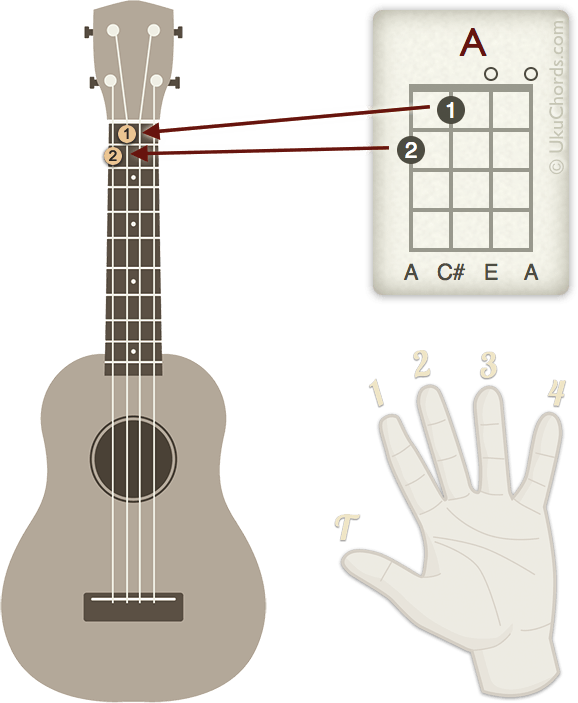
A ukulele chord diagram is a top-down picture of the first four or five frets of the neck. The four vertical lines represent the four strings. In standard tuning, reading left to right, those are G, C, E, and A. The horizontal lines are the frets, and the thick bar across the top is the nut, the piece of bone or plastic that separates the open strings from the fretted positions.
Dots show where to press your fingers, and the number inside each dot tells you which finger to use: 1 for index, 2 for middle, 3 for ring, and 4 for pinky. A hollow circle above a string means play that string open with no finger touching it. An × means mute the string or skip it entirely when you strum.
If a number appears next to the diagram (for example 5fr), the diagram is shifted up the neck and the top fret shown is actually the fifth fret rather than the first. That's how higher-position and barre chords get drawn without forcing a long, thin diagram.
The example pictured here is an A major chord. Press the G string at the second fret with your middle finger and the C string at the first fret with your index finger. The little o symbols on the E and A strings tell you to let those ring open. For a longer walkthrough with audio, see the how to read ukulele chord diagrams guide.