
Ukulele Capo: What It Does and How To Use One
 autor: Jonas
Kapodaster do ukulele to mały zacisk, który dociska wszystkie struny na jednym progu, podnosząc tonację, dzięki czemu możesz grać w wyższej tonacji, używając tych samych kształtów akordów. Świetnie nadaje się do dostosowania utworu do twojego głosu lub do grania razem z innymi. Kapodaster do gitary też pasuje do ukulele, choć specjalny kapodaster do ukulele leży lepiej.
A capo lets you raise the pitch of your ukulele without learning any new chords. Clamp it across a fret and every string sounds higher, so the easy shapes you already know suddenly play in a new key. Below is what a capo does, when to reach for one, how to use it and how to pick the right type.
Czym jest kapodaster?
Capo is short for capotasto, which is Italian for “head of fretboard”. It is a small tool you can strap around the neck of your ukulele to keep all the strings down on the same fret. So essentially, you are barring the strings on that particular fret with a capo instead of your finger.
Historical fact: Giovanni Battista Doni first used the term in his Annotazioni in 1640, though capo use probably began earlier in the 17th century. The first patented capo was designed by James Ashborn of Walcottville, Connecticut, USA.
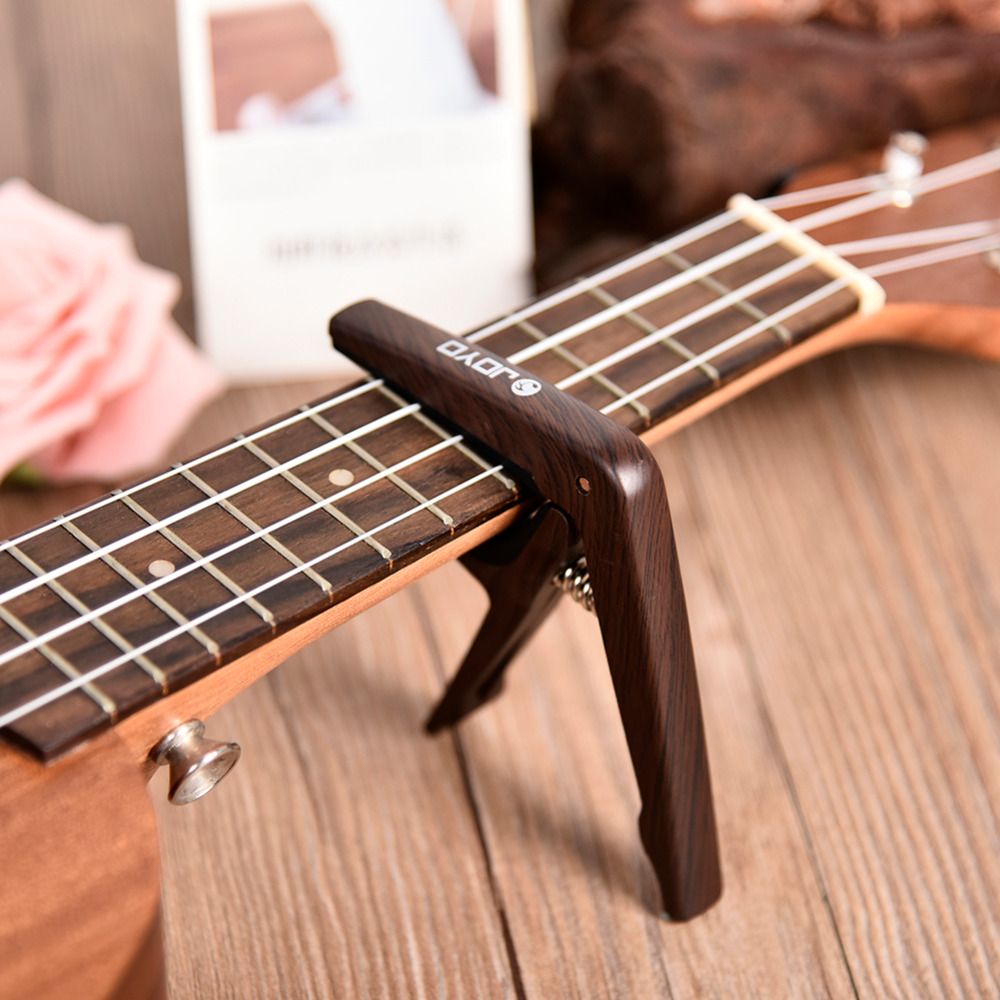
Co można zrobić z kapodastrem do ukulele?
Now that you know what it is, you probably want to know what it is used for. Using a capo will raise the pitch of the instrument, allowing you to play in different keys without all the hassle of using the tuning pegs to tune your ukulele to a higher key or transposing the chords.
Example: the standard tuning for a ukulele (GCEA) is also called “C” tuning. Remembering that the order of notes is A A# B C C# D D# E F F# G G#, putting a capo on the second fret will transform your ukulele’s tuning to a “D” tuning, two half steps higher.
Żeby to zilustrować, przyjrzyjmy się dwóm podstawowym akordom na ukulele: C i G. To dwa bardzo znane kształty akordów, odpowiednio 0002 i 0232. Zazwyczaj używa się ich w piosenkach w tonacji C.
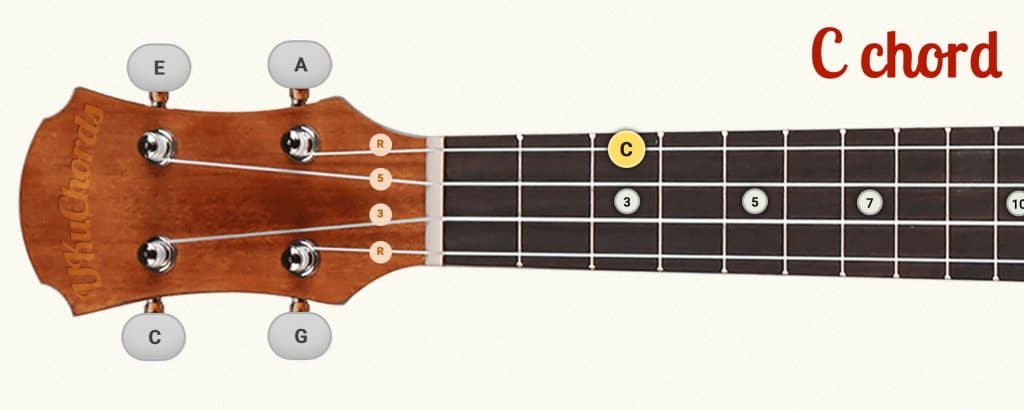
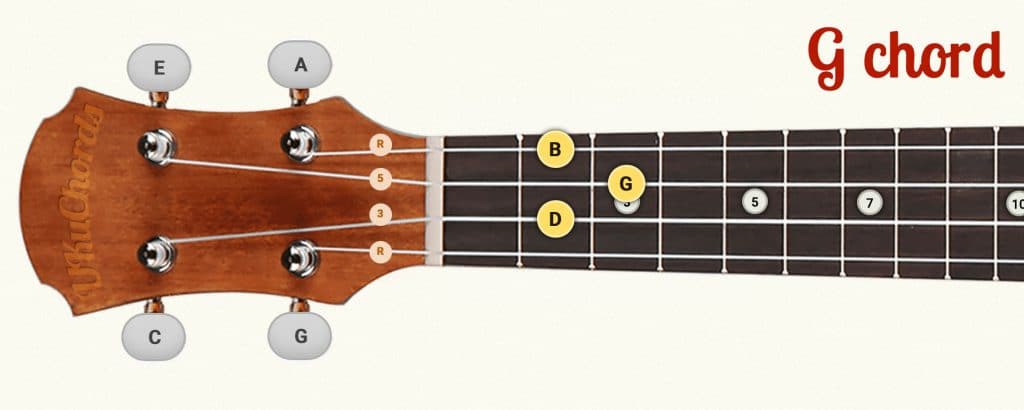
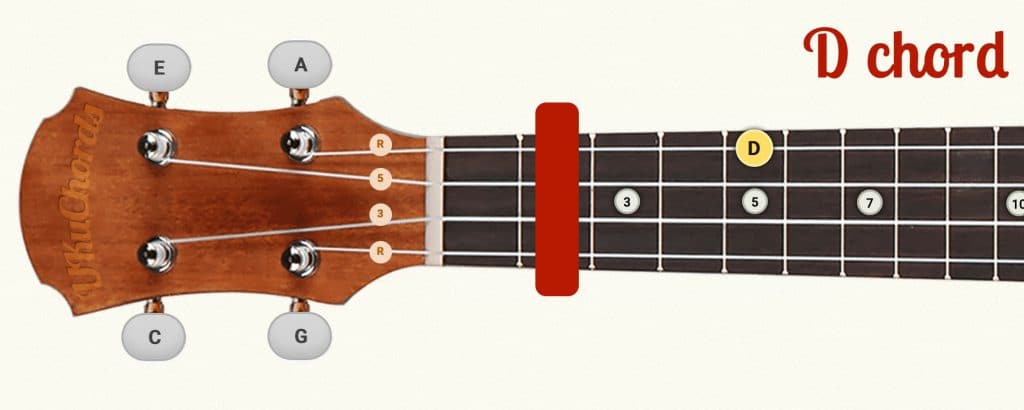
When you put a capo on the second fret (capo 2 or capo II) the tuning or pitch of the whole ukulele is transposed two half steps up. Play the same chord shapes as above and the chords you are actually playing are now D and A.
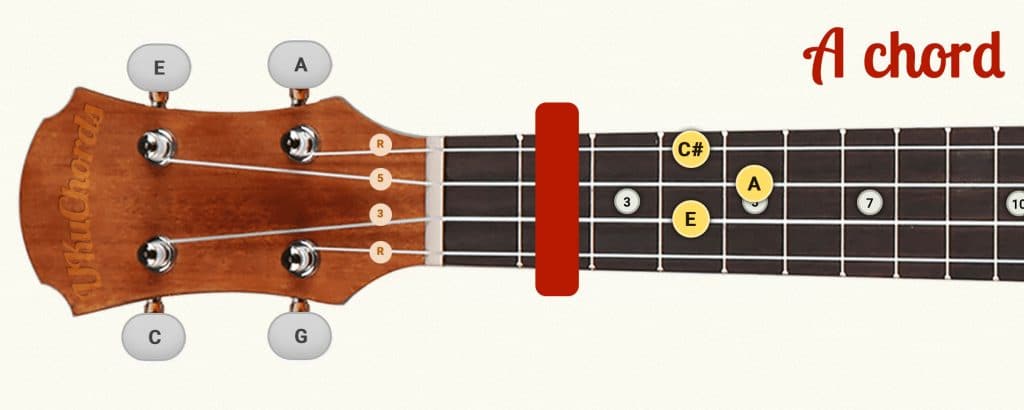
A capo is also helpful when you are trying to match a singer’s vocal range more closely. Raising the pitch of your uke one or two half steps is often all it takes to make things more comfortable for the singer.
Tabela kapodastrów do ukulele
Każdy próg podnosi ton o jeden półton. Zamocuj kapodaster tuż za progiem, a potem zagraj swoje zwykłe akordy – zabrzmią one wyżej o wskazaną wartość. Czyli kapodaster na 2. progu zamieni twój akord C na D.
| Pozycja kapodastra | Wysokość dźwięku wzrasta o | Litera „C” brzmi jak | Dźwięk litery „G” brzmi jak |
|---|---|---|---|
| 1. prog | 1 półton | C♯ | G♯ |
| 2. progu | 2 półtony (1 ton) | D | A |
| 3. progu | 3 półtony | D♯ | A♯ |
| 4. progi | 4 półtony | E | B |
| 5. progu | 5 półtonów | F | C |
| Fret 6 | 6 semitones | F♯ | C♯ |
| 7. progu | 7 półtonów | G | D |
Past the 7th fret the frets get very tight and the uke starts to sound thin, so most players stay in the 1 to 5 range. Once you know which key you have landed in, the free keys tool lists every chord that belongs there. Capo 2 with C shapes puts you in D major, for instance. My guide to keys explains the theory behind it.
Kiedy używa się kapodastra do ukulele?
There are two main reasons why you might want to use a capo. The first is to raise the pitch of a song to a different key so that it will match your vocal range.
The second is this. On UkuTabs you will sometimes see “alternative version” as a note at the beginning of a song. That means you can try to transpose the song down to make it easier to play.
For example: transposing 1 step down changes A#m to Am, which is much easier to play. However, if you are playing along with the original recording, this will not sound right. To get back to the same key, you can put a capo on the first fret and still play the Am chord. Now you are in the same key as the recording but the chords are much easier to play. Not all the chords posted along with songs on UkuTabs require the use of a capo. You can decide for yourself whether you want to transpose the key and use a capo or not.
Czy potrzebuję kapodastra do ukulele?
This is a personal choice. I used the capo myself quite a lot when I started playing the ukulele, but nowadays I do not use it at all. When you get better, you will learn how to play that A#m chord. I also find it easier not to rely on a capo when playing songs. All the same, it is an amazing tool for beginner ukulele players since it allows you to play a wider range of songs using the transpose and capo solution.
Jakie są rodzaje kapodastrów?
Kapodaster sprężynowy
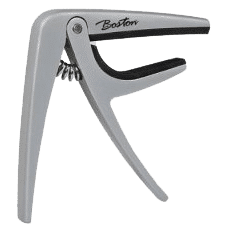
This is by far my favorite type of capo. The handle is spring-controlled and it allows you to change the capo’s position on the fretboard quickly with one hand. However, you cannot adjust the pressure applied to the strings and it tends to get quite bulky. I suggest looking at the several brands offering this type of capo. Kyser is a well-known brand that sells a very decent ukulele/banjo capo and is about $25 to $30. There are however cheaper alternatives such as this one below $10 and gets 5 stars on Amazon.
Kapodaster typu C-clamp
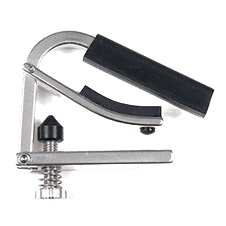
There is one big player on the clamp ukulele capo market and that is the Ukulele Capo made by Shubb, which comes in different colors. A C-clamp capo allows you to adjust the pressure applied to the strings by turning the little screw. You have to use the lever to put it on your ukulele. These capos are very sturdy, reliable and compact. However, they are also the most expensive capos.
The elastic or toggle capo
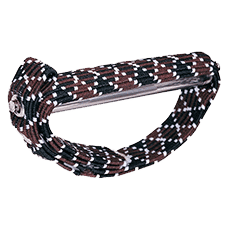
These used to be the cheapest capos out there, but recently came up in price. You can buy one for the same price as a spring-loaded or clamp capo. They are very lightweight and use a notched system or elastics to attach to your ukulele and tighten the strings. Although their low cost and small size are advantages, most of them are very low quality, tend to pull strings out of tune and break easily. Jim Dunlop offers a decent elastic ukulele capo.
NS Ukulele Capo Pro

This is one of the more recent capos: a dedicated ukulele capo by D’Addario (aka Planet Waves). It is a very lightweight capo, made of aluminum, with a very small footprint on the ukulele neck compared to the others (except the elastic capo). It is not that easy to maneuver around the fretboard once installed, but that is one of the only downsides. The PW-CP-12 NS is the latest model.
Mam kapodaster do gitary. Czy też mogę go użyć?
Of course you can, nothing is stopping you from using your guitar‘s capo. I have a black Jim Dunlop 88B guitar capo. It works just fine, but I must say I rarely use it anymore. If you are planning to use a capo on your ukulele regularly, I would go for a capo designed specifically for the ukulele.
My advice: use it for your voice, not to dodge chords
A capo can really come in handy, but I suggest only using it to change the key of your ukulele to match your voice. Actually play the original chords. Try not to depend on your capo when learning songs. If you come across a song with an unknown chord, you can always find the chord diagram at the top of each song or click on the chord here on UkuTabs. If it is not a song on UkuTabs, use the UkuTabs Chord Library to find out how to play that chord or read up on the chord shapes every player should know.
Najczęściej zadawane pytania o kapodastry do ukulele
Czy można używać kapodastra do gitary na ukulele?
Tak. Kapodaster do gitary świetnie trzyma się ukulele, choć wiele z nich jest szerszych i ściska mocniej, niż wymaga tego wąska szyjka ukulele, co może sprawić, że struny będą brzmiały nieco za wysoko. Specjalny kapodaster do ukulele albo krótki kapodaster typu „trigger” pasują lepiej, ale na początek kapodaster do gitary w zupełności wystarczy.
Do czego służy kapodaster na ukulele?
It clamps across one fret and shortens every string at once, so the whole ukulele sounds higher. You keep playing the same chord shapes, but they ring out in a higher key.
Potrzebujesz kapodastra do ukulele?
No, a capo is optional. You can always change key by learning new chord shapes. A capo just lets you raise the key instantly with shapes you already know, which is handy for matching a song to your voice or playing along with a guitar.
Jak używać kapodastra na ukulele?
Open the capo, place it just behind the fret you want (not on top of the metal fret) and clamp it so it presses all four strings evenly. Strum to check every string rings cleanly, then play your normal chord shapes.
Gdzie trzeba założyć kapodaster, żeby grać w określonej tonacji?
Each fret raises the pitch one semitone, so the key goes up too. To go up a whole tone, for example from C to D, clamp on the 2nd fret and play your C shapes. The capo chart above lists the common positions.
Does a capo put your ukulele out of tune?
It can. Clamping too hard or sitting the capo on top of the fret instead of just behind it bends the strings sharp. Fit it snug rather than tight, then check your tuning with the free tuner after it is on. Cheap elastic capos are the worst offenders.
Wypróbuj kapodaster przy jakiejś piosence
Put a capo on the 2nd fret, play a song you already know with your usual shapes and hear it lift into a brighter key. Somewhere Over The Rainbow is a good one to test it on. There are thousands more in the easy ukulele songs list. Use the chord library to look up shapes, the keys tool to see what fits the key you have moved into and the ukulele tuner to get in tune first. Feel free to contact me whenever you need more information about using a capo.
Niektóre linki na tej stronie to linki partnerskie serwisu Amazon. Jako partner programu Amazon, UkuTabs otrzymuje prowizję od kwalifikujących się zakupów bez żadnych dodatkowych kosztów dla Ciebie.
What are some popular songs to play with a capo?