
Il capotasto per ukulele: cosa fa e come si usa
 di Jonas
Il capotasto per ukulele è un piccolo attrezzo che preme tutte le corde su un tasto solo e alza l'altezza, così suoni in una tonalità più alta con le stesse forme di accordo. È perfetto per adattare una canzone alla tua voce o per suonare insieme ad altri. Anche un capotasto da chitarra funziona sull'ukulele, ma uno pensato per l'uke calza meglio.
- Cosa fa davvero un capotasto
- La tabella del capotasto
- Come si usa e quale comprare
Il capotasto ti fa alzare l’altezza dell’ukulele senza imparare nessun accordo nuovo. Lo agganci su un tasto e tutte le corde suonano più alte, così le forme facili che già conosci si ritrovano di colpo in una tonalità nuova. Qui sotto trovi cosa fa un capotasto, quando conviene tirarlo fuori, come si mette e come scegliere il tipo giusto.
Che cos’è un capotasto?
Capo, in inglese, è l’abbreviazione di capotasto, che vuol dire “testa della tastiera”. È un piccolo attrezzo che puoi fissare intorno al manico dell’ukulele per tenere tutte le corde premute sullo stesso tasto. Quindi in pratica stai facendo il barré su quel tasto preciso, con un capotasto al posto del dito.
Un fatto storico: Giovanni Battista Doni usò il termine per la prima volta nelle sue Annotazioni nel 1640, anche se probabilmente il capotasto si usava già da prima, nel corso del Seicento. Il primo capotasto brevettato fu progettato da James Ashborn di Wolcottville, Connecticut, USA.
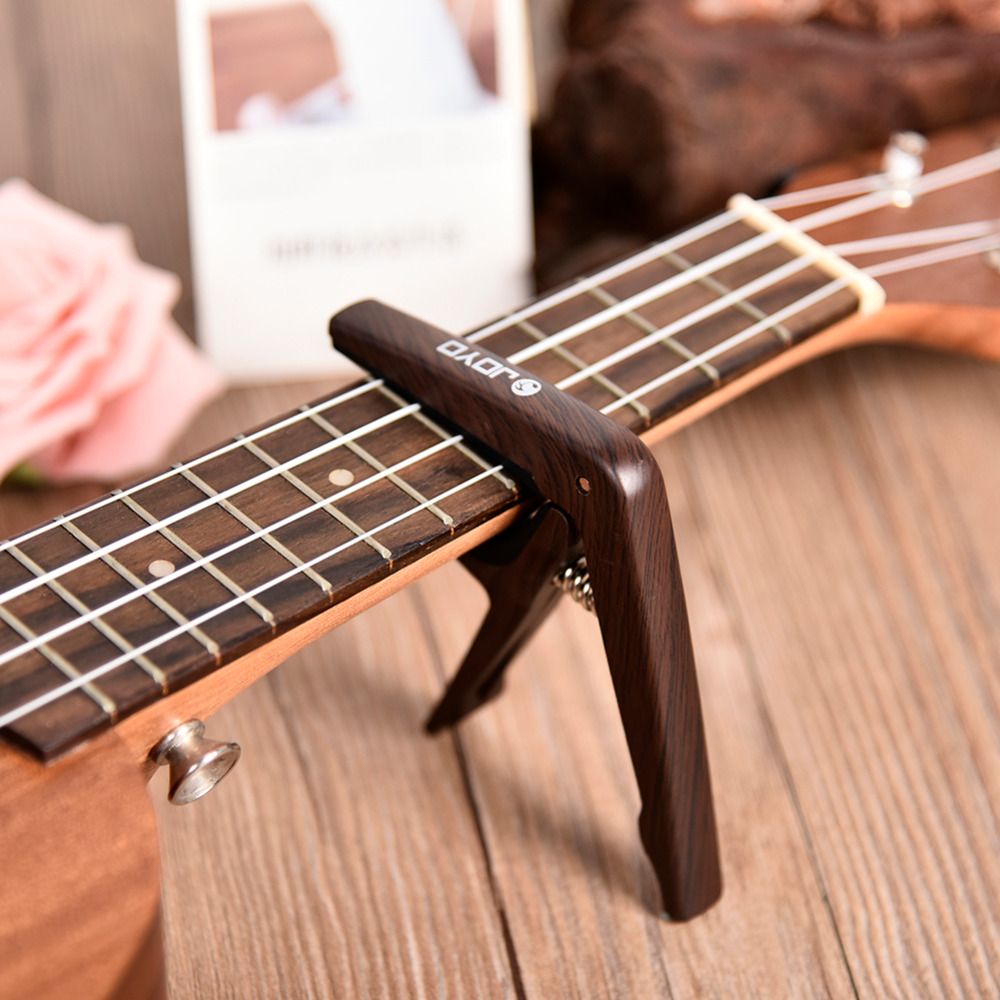
Cosa puoi fare con un capotasto per ukulele?
Ora che sai che cos’è, vorrai sapere a cosa serve. Il capotasto alza l’altezza dello strumento e ti lascia suonare in tonalità diverse senza la seccatura di girare i piroli per portare l’ukulele su un’accordatura più alta o di trasporre gli accordi.
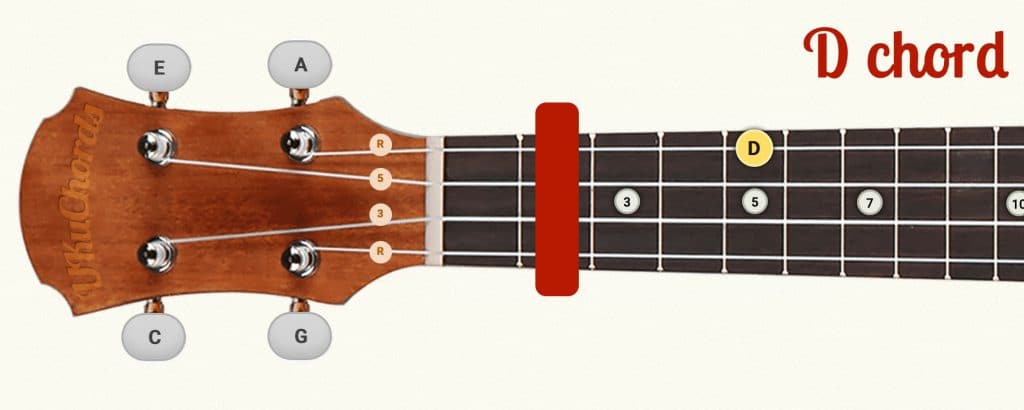
Esempio: l’accordatura standard dell’ukulele (GCEA) si chiama anche accordatura in “C”. Ricordando che l’ordine delle note è A A# B C C# D D# E F F# G G#, mettere un capotasto al secondo tasto trasforma l’accordatura del tuo ukulele in un’accordatura in “D”, due semitoni più in alto.
Per farti vedere come funziona, prendiamo due accordi base per ukulele: C e G. Se sai come leggere i diagrammi di accordo, sono due forme che ti dicono già qualcosa: 0003 e 0232 rispettivamente. Di solito si usano nelle canzoni in tonalità di C.
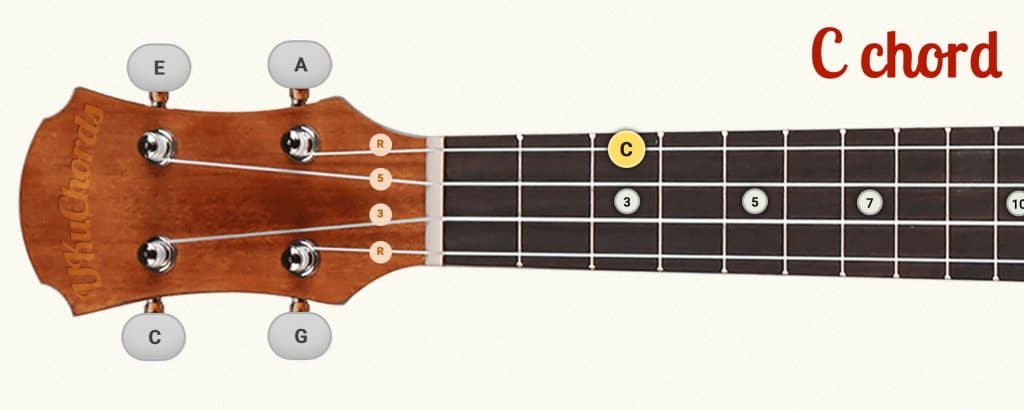
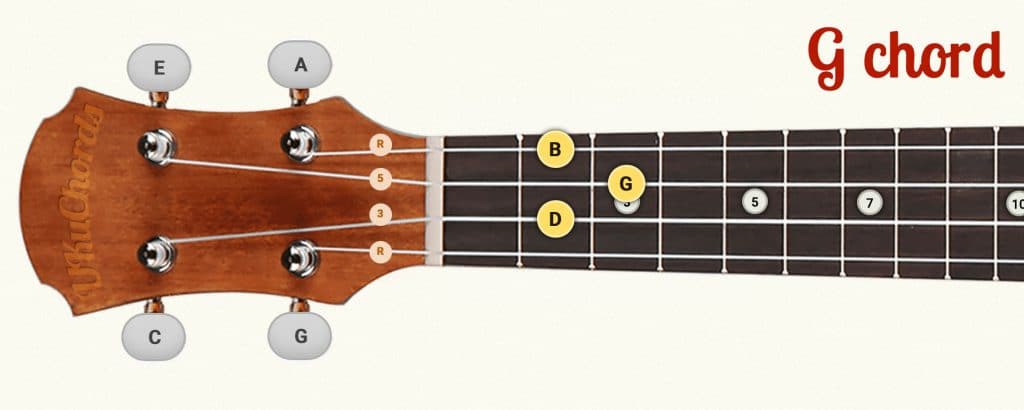
Quando metti un capotasto al secondo tasto (capo 2 o capo II) l’accordatura, cioè l’altezza di tutto l’ukulele, si sposta di due semitoni verso l’alto. Suona le stesse forme di prima e gli accordi che stai suonando davvero adesso sono D e A.
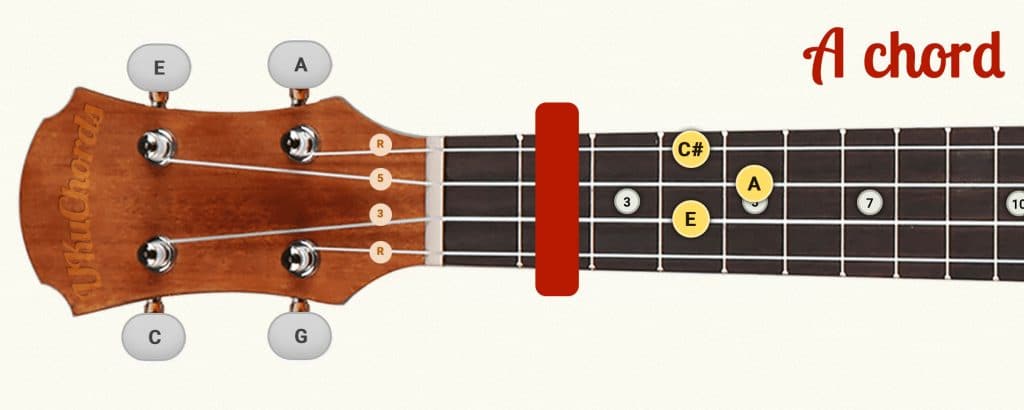
Il capotasto è utile anche quando cerchi di avvicinarti all’estensione vocale di chi canta. Spesso basta alzare l’altezza dell’uke di uno o due semitoni perché a chi canta le cose vengano più comode.
Tabella del capotasto per ukulele
Ogni tasto alza l’altezza di un semitono. Aggancia il capotasto appena dietro al tasto, poi suona le tue solite forme di accordo e saliranno di quanto indicato in tabella. Quindi il capotasto al secondo tasto trasforma la tua forma di C in un D.
| Posizione del capotasto | L’altezza sale di | La forma di C suona come | La forma di G suona come |
|---|---|---|---|
| Tasto 1 | 1 semitono | C♯ | G♯ |
| Tasto 2 | 2 semitoni (1 tono) | D | A |
| Tasto 3 | 3 semitoni | D♯ | A♯ |
| Tasto 4 | 4 semitoni | E | B |
| Tasto 5 | 5 semitoni | F | C |
| Tasto 6 | 6 semitoni | F♯ | C♯ |
| Tasto 7 | 7 semitoni | G | D |
Oltre il settimo tasto gli spazi tra i tasti si fanno strettissimi e l’uke inizia a suonare sottile, quindi quasi tutti restano tra il primo e il quinto. Una volta che sai in che tonalità sei finito, lo strumento delle tonalità gratuito ti elenca tutti gli accordi che ne fanno parte. Il capotasto al secondo tasto con le forme di C ti porta in D major, per esempio. La mia guida alle tonalità dell’ukulele spiega la teoria che c’è dietro.
Quando si usa un capotasto per ukulele?
Ci sono due motivi principali per cui potresti volere un capotasto. Il primo è alzare l’altezza di una canzone, portandola in una tonalità diversa, così da farla combaciare con la tua estensione vocale.
Il secondo è questo. Su UkuTabs ogni tanto trovi “alternative version” come nota all’inizio di una canzone. Vuol dire che puoi provare a trasporre la canzone verso il basso per renderla più facile da suonare.
Per esempio: trasporre di 1 semitono verso il basso trasforma A#m in Am, che è molto più facile da suonare. Però, se stai suonando insieme alla registrazione originale, così non suonerà giusto. Per tornare nella stessa tonalità puoi mettere un capotasto al primo tasto e continuare a suonare l’accordo di Am. Adesso sei nella stessa tonalità della registrazione, ma con accordi molto più facili. Non tutti gli accordi pubblicati insieme alle canzoni su UkuTabs richiedono un capotasto. Puoi decidere tu se trasporre la tonalità e usare il capotasto oppure no.
Mi serve un capotasto per ukulele?
È una scelta personale. Io il capotasto l’ho usato parecchio quando ho iniziato a suonare l’ukulele, ma oggi non lo uso più per niente. Quando migliori, impari a suonare quell’accordo di A#m. E poi mi trovo meglio a non dipendere dal capotasto quando suono le canzoni. Detto questo, è un attrezzo fantastico per chi inizia con l’ukulele, perché ti fa suonare molte più canzoni combinando trasposizione e capotasto.
Che tipi di capotasto esistono?
Capotasto a molla
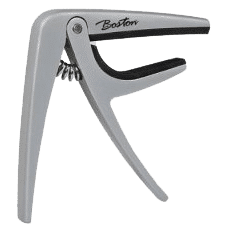
Questo è di gran lunga il mio tipo di capotasto preferito. La leva è comandata da una molla e ti fa spostare il capotasto sulla tastiera in fretta, con una mano sola. Però non puoi regolare la pressione sulle corde e tende a essere piuttosto ingombrante. Ti consiglio di dare un’occhiata alle varie marche che offrono questo tipo di capotasto. Kyser è una marca molto conosciuta e vende un capotasto per ukulele/banjo davvero valido e costa tra i 25 e i 30 dollari. Ci sono però alternative più economiche, come questo che costa meno di 10 dollari e ha 5 stelle su Amazon.
Il capotasto a morsetto a C
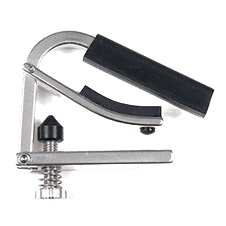
Sul mercato dei capotasti a morsetto per ukulele c’è un nome che domina, ed è l’Ukulele Capo di Shubb, che esiste in diversi colori. Un capotasto a morsetto a C ti fa regolare la pressione sulle corde girando la vitina. Per metterlo sull’ukulele devi usare la levetta. Questi capotasti sono molto solidi, affidabili e compatti. Sono però anche i più cari.
Il capotasto elastico o a levetta
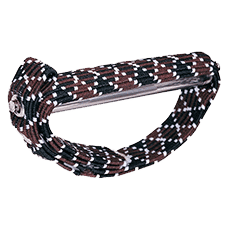
Una volta erano i capotasti più economici in circolazione, ma ultimamente sono saliti di prezzo. Puoi comprarne uno allo stesso prezzo di un capotasto a molla o a morsetto. Sono molto leggeri e si agganciano all’ukulele con un sistema a tacche o con degli elastici che stringono le corde. Il costo basso e l’ingombro minimo sono un vantaggio, ma la maggior parte è di qualità molto scarsa, tende a scordare le corde e si rompe facilmente. Jim Dunlop propone un capotasto elastico per ukulele decente.
NS Ukulele Capo Pro

Questo è uno dei capotasti più recenti: un capotasto dedicato all’ukulele, firmato D’Addario (alias Planet Waves). È un capotasto molto leggero, in alluminio, con un ingombro sul manico dell’ukulele molto piccolo rispetto agli altri (tranne quello elastico). Una volta montato non è così comodo da spostare sulla tastiera, ma questo è quasi l’unico difetto. Il PW-CP-12 NS è il modello più recente.
Ho un capotasto da chitarra. Posso usare anche quello?
Certo che puoi, niente ti impedisce di usare il capotasto della tua chitarra. Io ho un capotasto da chitarra Jim Dunlop 88B nero. Funziona benissimo, ma devo dire che ormai lo uso di rado. Se hai intenzione di usare il capotasto sull’ukulele con una certa regolarità, io andrei su un capotasto pensato apposta per l’ukulele.
Il mio consiglio: usalo per la voce, non per schivare gli accordi
Il capotasto può tornare davvero comodo, ma ti consiglio di usarlo solo per portare l’ukulele nella tonalità che sta bene alla tua voce. Gli accordi originali suonali davvero. Cerca di non dipendere dal capotasto quando impari le canzoni. Se ti capita una canzone con un accordo che non conosci, il diagramma dell’accordo lo trovi sempre in cima a ogni canzone, oppure clicchi sull’accordo qui su UkuTabs. Se la canzone non è su UkuTabs, usa la libreria di accordi UkuTabs per scoprire come si suona quell’accordo, oppure leggiti gli accordi base per ukulele che ogni musicista dovrebbe conoscere.
Domande frequenti sul capotasto per ukulele
Si può usare un capotasto da chitarra sull’ukulele?
Sì. Un capotasto da chitarra si aggancia bene a un ukulele, anche se molti capotasti da chitarra sono più larghi e stringono più forte di quanto serva a un manico piccolo, e questo può tirare le corde e farle suonare un po’ crescenti. Un capotasto dedicato all’ukulele o un capotasto a molla corto si adatta meglio, ma per iniziare quello da chitarra va benissimo.
Cosa fa un capotasto sull’ukulele?
Si aggancia su un tasto e accorcia tutte le corde insieme, così tutto l’ukulele suona più alto. Continui a suonare le stesse forme di accordo, ma escono in una tonalità più alta.
Serve un capotasto per l’ukulele?
No, il capotasto è facoltativo. La tonalità puoi sempre cambiarla imparando forme di accordo nuove. Il capotasto ti fa solo alzare la tonalità all’istante con le forme che già conosci, il che è comodo per adattare una canzone alla tua voce o per suonare insieme a una chitarra.
Come si usa un capotasto sull’ukulele?
Apri il capotasto, mettilo appena dietro al tasto che vuoi (non sopra al tasto di metallo) e stringilo in modo che prema uniformemente tutte e quattro le corde. Fai una pennata per controllare che ogni corda suoni pulita, poi suona le tue solite forme di accordo.
Dove va messo il capotasto per suonare in una certa tonalità?
Ogni tasto alza l’altezza di un semitono, quindi sale anche la tonalità. Per salire di un tono intero, per esempio da C a D, aggancialo al secondo tasto e suona le tue forme di C. La tabella del capotasto qui sopra elenca le posizioni più comuni.
Il capotasto scorda l’ukulele?
Può succedere. Stringere troppo o appoggiare il capotasto sopra al tasto invece che appena dietro piega le corde e le fa suonare crescenti. Mettilo aderente più che stretto, poi controlla l’accordatura con l’accordatore gratuito quando è montato. I capotasti elastici economici sono i peggiori da questo punto di vista.
Aggancialo al secondo tasto e canta
Metti un capotasto al secondo tasto, suona una canzone che conosci già con le tue forme di sempre e sentila salire in una tonalità più brillante. Somewhere Over The Rainbow è una buona canzone su cui provare. Ce ne sono altre migliaia nell’elenco delle canzoni facili per ukulele. Usa la libreria di accordi per cercare le forme, lo strumento delle tonalità per vedere cosa ci sta nella tonalità in cui sei finito e l’accordatore per ukulele per accordarti prima. Scrivimi pure ogni volta che ti serve qualche informazione in più sull’uso del capotasto.
Alcuni link in questa pagina sono link di affiliazione Amazon. Come Affiliato Amazon, UkuTabs guadagna dagli acquisti idonei senza alcun costo aggiuntivo per te.
What are some popular songs to play with a capo?