
Ukelelecapo: wat hij doet en hoe je hem gebruikt
 van Jonas
Een ukelelecapo is een klein klemmetje dat alle snaren op één fret indrukt en zo de toonhoogte verhoogt, zodat je met dezelfde grepen in een hogere toonaard speelt. Ideaal om een nummer bij je stem te laten passen of om met anderen mee te spelen. Een gitaarcapo werkt ook op een ukelele, al past een echte ukelelecapo beter.
- Wat een capo eigenlijk doet
- De capotabel
- Hoe je hem gebruikt en welk type je koopt
Met een capo verhoog je de toonhoogte van je ukelele zonder ook maar één nieuw akkoord te leren. Klem hem over een fret en elke snaar klinkt hoger, dus de makkelijke grepen die je al kent spelen ineens in een nieuwe toonaard. Hieronder lees je wat een capo doet, wanneer je er een pakt, hoe je hem gebruikt en hoe je het juiste type kiest.
Wat is een capo?
Capo is de afkorting van capotasto, Italiaans voor “hoofd van de toets”. Het is een klein hulpmiddel dat je rond de hals van je ukelele klemt om alle snaren op dezelfde fret ingedrukt te houden. Je legt met een capo dus eigenlijk een barré op die ene fret, in plaats van met je vinger.
Historisch weetje: Giovanni Battista Doni gebruikte de term voor het eerst in zijn Annotazioni in 1640, al werd de capo waarschijnlijk al eerder in de 17e eeuw gebruikt. De eerste gepatenteerde capo werd ontworpen door James Ashborn uit Wolcottville, Connecticut, VS.
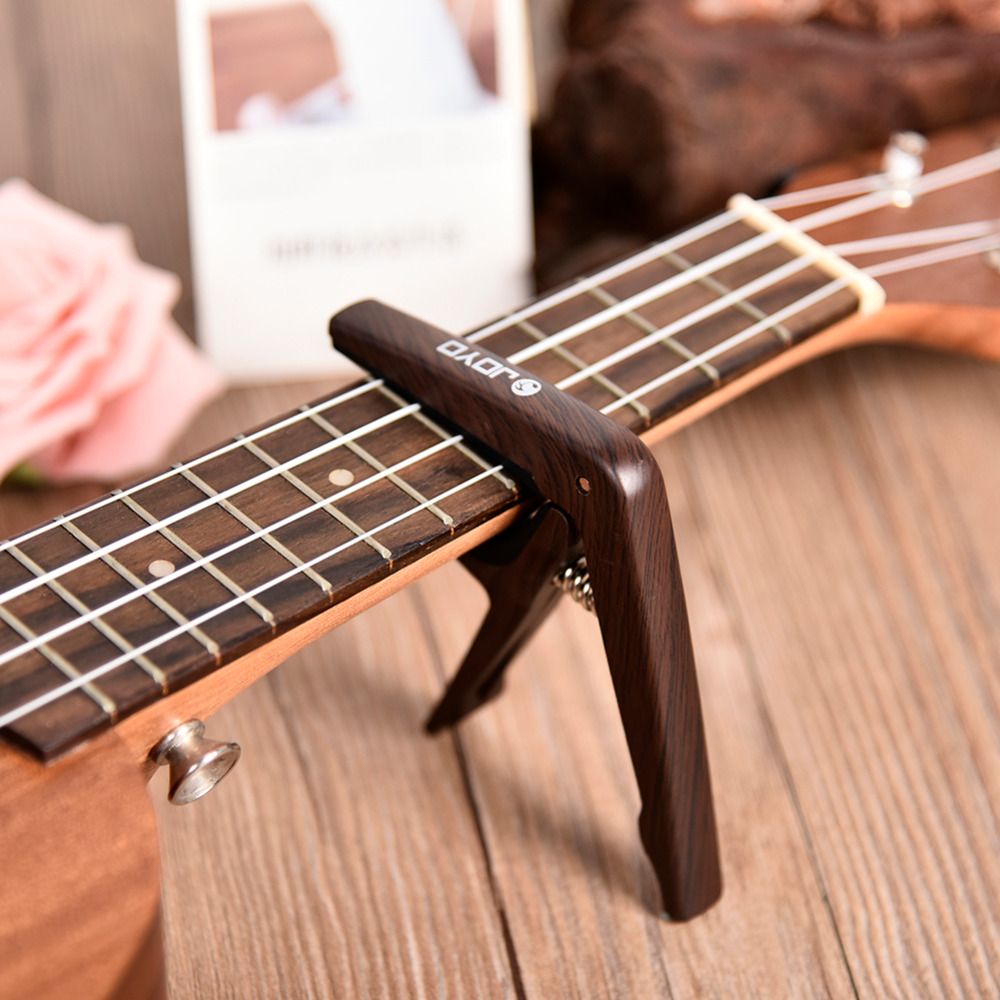
Wat kun je met een ukelelecapo doen?
Nu je weet wat het is, wil je vast weten waar je hem voor gebruikt. Met een capo verhoog je de toonhoogte van het instrument, zodat je in andere toonaarden kunt spelen zonder je ukelele met de stemknoppen naar een hogere toonaard te moeten stemmen of de akkoorden te moeten transponeren.
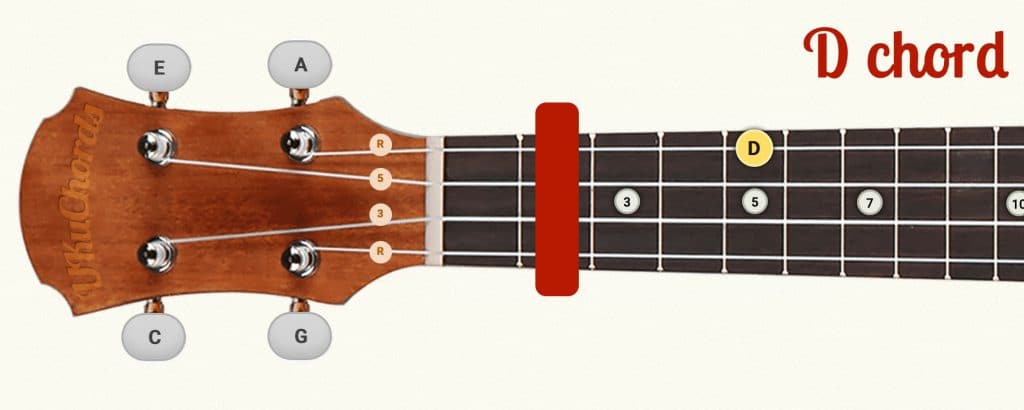
Voorbeeld: de standaardstemming van een ukelele (GCEA) heet ook wel “C”-stemming. Als je onthoudt dat de volgorde van de noten A A# B C C# D D# E F F# G G# is, dan verandert een capo op de tweede fret de stemming van je ukelele in een “D”-stemming, twee halve tonen hoger.
Laten we dat illustreren met twee basisakkoorden voor ukelele: C en G. Twee heel vertrouwde grepen, respectievelijk 0003 en 0232, als je weet hoe je akkoorddiagrammen leest. Meestal gebruikt in nummers in de toonaard C.
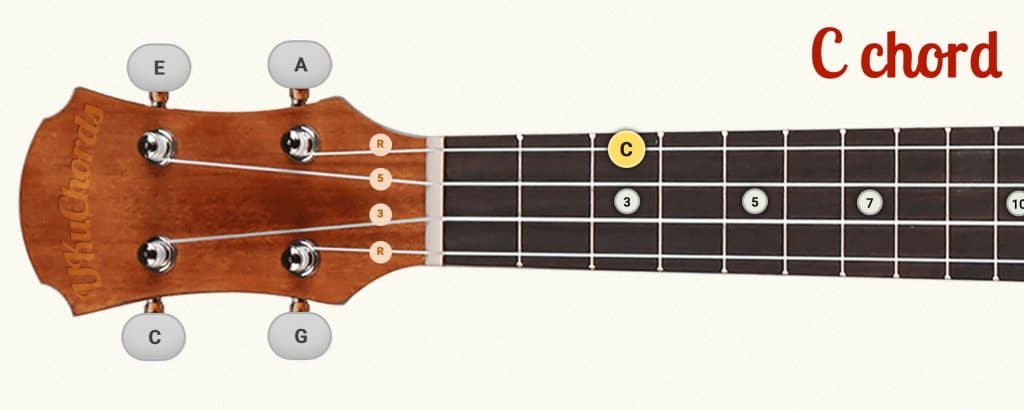
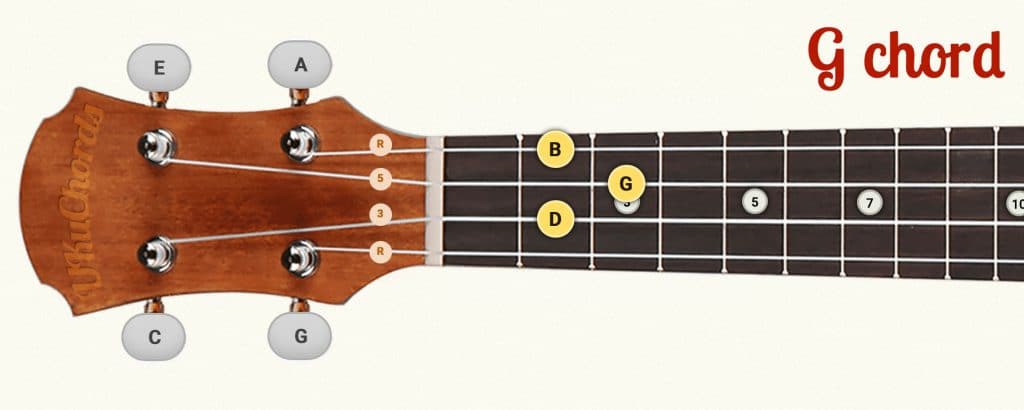
Zet je een capo op de tweede fret (capo 2 of capo II), dan wordt de stemming of toonhoogte van de hele ukelele twee halve tonen omhoog getransponeerd. Speel dezelfde grepen als hierboven en de akkoorden die je nu echt speelt zijn D en A.
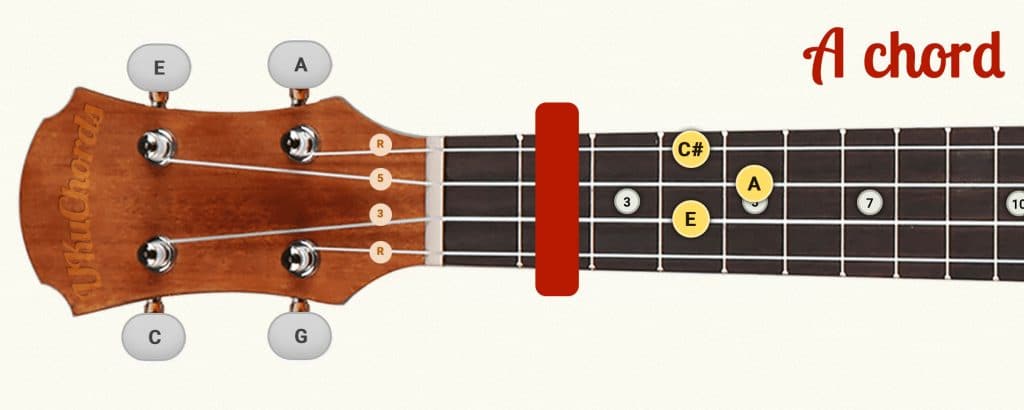
Een capo helpt ook als je dichter bij het stembereik van een zanger wilt komen. Je ukelele één of twee halve tonen hoger zetten is vaak al genoeg om het de zanger een stuk comfortabeler te maken.
Capotabel voor de ukelele
Elke fret verhoogt de toonhoogte met een halve toon. Klem de capo net achter de fret, speel dan je gewone grepen en ze klinken precies zoveel hoger als hieronder staat. Een capo op de tweede fret maakt dus van je C-greep een D.
| Positie capo | Toonhoogte stijgt met | C-greep klinkt als | G-greep klinkt als |
|---|---|---|---|
| Fret 1 | 1 halve toon | C♯ | G♯ |
| Fret 2 | 2 halve tonen (1 hele toon) | D | A |
| Fret 3 | 3 halve tonen | D♯ | A♯ |
| Fret 4 | 4 halve tonen | E | B |
| Fret 5 | 5 halve tonen | F | C |
| Fret 6 | 6 halve tonen | F♯ | C♯ |
| Fret 7 | 7 halve tonen | G | D |
Voorbij de zevende fret liggen de frets heel dicht op elkaar en gaat de ukelele dun klinken, dus de meeste spelers blijven tussen 1 en 5. Zodra je weet in welke toonaard je bent beland, geeft de gratis toonaardentool je elk akkoord dat daarbij hoort. Capo 2 met C-grepen brengt je bijvoorbeeld in D majeur. In mijn gids toonaarden op de ukelele leg ik de theorie erachter uit.
Wanneer gebruik je een ukelelecapo?
Er zijn twee belangrijke redenen om een capo te gebruiken. De eerste is de toonhoogte van een nummer naar een andere toonaard brengen zodat het bij je stembereik past.
De tweede is deze. Op UkuTabs zie je bij het begin van een nummer soms de opmerking “alternative version” staan. Dat betekent dat je het nummer omlaag kunt proberen te transponeren om het makkelijker te maken.
Bijvoorbeeld: één halve toon omlaag transponeren verandert A#m in Am, en dat is een stuk makkelijker te spelen. Speel je mee met de originele opname, dan klinkt dat niet goed. Om weer in dezelfde toonaard te komen zet je een capo op de eerste fret en speel je nog steeds het Am-akkoord. Nu zit je in dezelfde toonaard als de opname, maar zijn de akkoorden veel makkelijker. Niet alle akkoorden die bij de nummers op UkuTabs staan vragen om een capo. Je beslist zelf of je de toonaard wilt transponeren en een capo wilt gebruiken of niet.
Heb ik een ukelelecapo nodig?
Dat is een persoonlijke keuze. Zelf gebruikte ik de capo behoorlijk vaak toen ik begon met ukelele spelen, maar tegenwoordig gebruik ik hem helemaal niet meer. Als je beter wordt, leer je dat A#m-akkoord vanzelf spelen. Ik vind het ook prettiger om bij nummers niet op een capo te leunen. Toch is het een geweldig hulpmiddel voor beginnende ukelelespelers, want met de combinatie van transponeren en een capo speel je meteen veel meer nummers.
Welke soorten capo’s zijn er?
Capo met veer
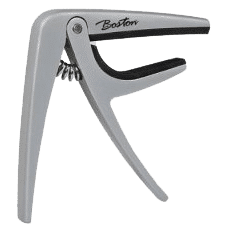
Dit is veruit mijn favoriete type capo. Het handvat werkt met een veer en daarmee verschuif je de capo snel met één hand over de toets. Je kunt de druk op de snaren alleen niet afstellen en het ding wordt vaak nogal log. Kijk gerust naar de verschillende merken die dit type capo maken. Kyser is een bekend merk dat een heel degelijke capo voor ukelele en banjo verkoopt en die kost ongeveer $25 tot $30. Er zijn wel goedkopere alternatieven, zoals deze van onder de $10 met 5 sterren op Amazon.
De C-klemcapo
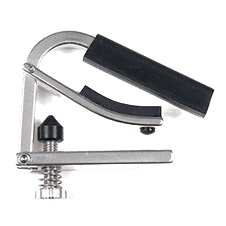
Op de markt van klemcapo’s voor ukelele is er één grote speler en dat is de Ukulele Capo van Shubb, die in verschillende kleuren te krijgen is. Met een C-klemcapo stel je de druk op de snaren af door aan het schroefje te draaien. Je moet het hendeltje gebruiken om hem op je ukelele te zetten. Deze capo’s zijn heel stevig, betrouwbaar en compact. Ze zijn alleen ook de duurste capo’s.
De elastische of toggle-capo
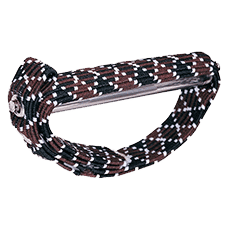
Dit waren vroeger de goedkoopste capo’s, maar ze zijn de laatste tijd duurder geworden. Je kunt er een kopen voor dezelfde prijs als een capo met veer of een klemcapo. Ze zijn heel licht en gebruiken inkepingen of elastiek om zich aan je ukelele vast te zetten en de snaren aan te spannen. Hun lage prijs en kleine formaat zijn voordelen, maar de meeste zijn van heel lage kwaliteit, zorgen dat de snaren ontstemd raken en gaan makkelijk kapot. Jim Dunlop heeft een degelijke elastische capo voor ukelele.
NS Ukulele Capo Pro

Dit is een van de recentere capo’s: een capo speciaal voor ukelele van D’Addario (ook bekend als Planet Waves). Het is een heel lichte capo van aluminium, met een veel kleinere voetafdruk op de ukelelehals dan de andere (op de elastische capo na). Hij is niet zo makkelijk te verschuiven over de toets als hij eenmaal zit, maar dat is zowat het enige nadeel. De PW-CP-12 NS is het nieuwste model.
Ik heb een gitaarcapo. Kan ik die ook gebruiken?
Natuurlijk kan dat, niets houdt je tegen om de capo van je gitaar te gebruiken. Ik heb een zwarte Jim Dunlop 88B gitaarcapo. Die werkt prima, maar ik moet zeggen dat ik hem nog zelden gebruik. Ben je van plan om regelmatig een capo op je ukelele te zetten, dan zou ik voor een capo gaan die speciaal voor de ukelele gemaakt is.
Mijn advies: gebruik hem voor je stem, niet om akkoorden te ontwijken
Een capo kan echt handig zijn, maar ik raad aan hem alleen te gebruiken om de toonaard van je ukelele bij je stem te laten passen. Speel de originele akkoorden gewoon. Probeer bij het leren van nummers niet op je capo te leunen. Kom je een nummer met een onbekend akkoord tegen, dan vind je het akkoorddiagram altijd bovenaan elk nummer of klik je hier op UkuTabs op het akkoord. Staat het nummer niet op UkuTabs, gebruik dan de akkoordenbibliotheek van UkuTabs om te zien hoe je dat akkoord speelt of lees meer over de basisakkoorden voor ukelele die elke speler zou moeten kennen.
Veelgestelde vragen over de capo
Kun je een gitaarcapo op een ukelele gebruiken?
Ja. Een gitaarcapo klemt prima op een ukelele, al zijn veel gitaarcapo’s breder en knijpen ze harder dan een smalle ukelelehals nodig heeft, waardoor de snaren iets te hoog kunnen komen. Een capo speciaal voor ukelele of een korte triggercapo past beter, maar om mee te beginnen voldoet een gitaarcapo prima.
Wat doet een capo op een ukelele?
Hij klemt over één fret en verkort alle snaren tegelijk, waardoor de hele ukelele hoger klinkt. Je blijft dezelfde grepen spelen, maar ze klinken in een hogere toonaard.
Heb je een capo nodig voor de ukelele?
Nee, een capo is optioneel. Je kunt altijd van toonaard wisselen door nieuwe grepen te leren. Met een capo ga je alleen meteen omhoog met grepen die je al kent, wat handig is om een nummer bij je stem te laten passen of om met een gitaar mee te spelen.
Hoe gebruik je een capo op een ukelele?
Open de capo, zet hem net achter de fret die je wilt (niet bovenop de metalen fret) en klem hem zo dat hij alle vier de snaren gelijkmatig indrukt. Strum even om te horen of elke snaar helder klinkt en speel dan je gewone grepen.
Waar zet je een capo om in een bepaalde toonaard te spelen?
Elke fret verhoogt de toonhoogte met een halve toon, dus de toonaard gaat mee omhoog. Wil je een hele toon omhoog, bijvoorbeeld van C naar D, klem hem dan op de tweede fret en speel je C-grepen. De capotabel hierboven geeft de gangbare posities.
Raakt je ukelele ontstemd door een capo?
Dat kan. Te hard klemmen of de capo bovenop de fret zetten in plaats van er net achter trekt de snaren te hoog. Zet hem stevig vast maar niet te strak en controleer je stemming daarna met het gratis stemapparaat. Goedkope elastische capo’s zijn de grootste boosdoeners.
Probeer je capo op een nummer
Zet een capo op de tweede fret, speel een nummer dat je al kent met je gewone grepen en hoor hoe het optilt naar een helderder klinkende toonaard. Somewhere Over The Rainbow is een goed nummer om het op uit te proberen. Er staan er nog duizenden in de lijst met makkelijke nummers voor ukelele. Gebruik de akkoordenbibliotheek om grepen op te zoeken, de toonaardentool om te zien wat past bij de toonaard waarin je bent beland en het online stemapparaat om eerst goed te stemmen. Neem gerust contact met me op als je meer wilt weten over het gebruik van een capo.
Sommige links op deze pagina zijn Amazon-affiliatelinks. Als Amazon-partner verdient UkuTabs aan in aanmerking komende aankopen, zonder extra kosten voor jou.
What are some popular songs to play with a capo?