
La cejilla de ukelele: qué hace y cómo usarla
 de Jonas
Una cejilla de ukelele es una pequeña pinza que presiona todas las cuerdas en un mismo traste y sube la afinación, de modo que tocas en una tonalidad más alta con las mismas posiciones de acorde. Va genial para ajustar una canción a tu voz o para tocar con otras personas. Una cejilla de guitarra también sirve en un ukelele, aunque una cejilla específica de uke encaja mejor.
- Qué hace realmente una cejilla
- La tabla de cejilla
- Cómo usarla y qué tipo comprar
Una cejilla te permite subir la afinación del ukelele sin aprender ni un acorde nuevo. Engánchala en un traste y todas las cuerdas suenan más agudas, de modo que las posiciones fáciles que ya conoces de repente suenan en otra tonalidad. Abajo tienes qué hace una cejilla, cuándo recurrir a ella, cómo usarla y cómo elegir el tipo adecuado.
¿Qué es una cejilla?
En inglés se llama capo, abreviatura de capotasto, que en italiano significa “cabeza del diapasón”. Es una pequeña herramienta que se sujeta alrededor del mástil del ukelele para mantener todas las cuerdas presionadas en el mismo traste. En esencia, estás haciendo la cejilla en ese traste con la herramienta en lugar de con tu dedo.
Dato histórico: Giovanni Battista Doni usó por primera vez el término en sus Annotazioni de 1640, aunque el uso de la cejilla probablemente empezó antes, en el siglo XVII. La primera cejilla patentada la diseñó James Ashborn, de Wolcottville, Connecticut, EE. UU.
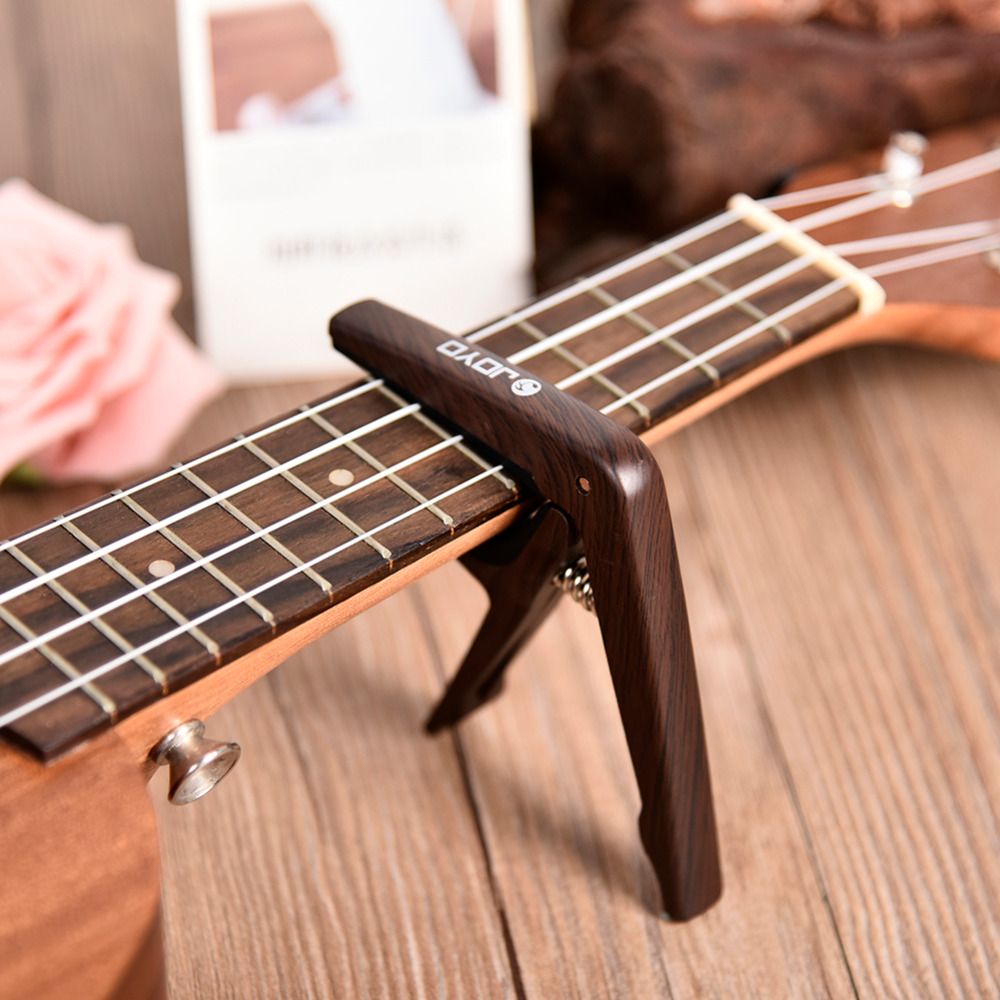
¿Qué puedes hacer con una cejilla de ukelele?
Ahora que sabes qué es, seguramente quieras saber para qué sirve. Usar una cejilla sube la afinación del instrumento y te permite tocar en distintas tonalidades sin el engorro de reafinar el ukelele más agudo con las clavijas ni de transportar los acordes.
Ejemplo: la afinación estándar del ukelele (GCEA) también se llama afinación “en Do”. Recordando que el orden de las notas es A A# B C C# D D# E F F# G G#, poner una cejilla en el segundo traste transforma la afinación de tu ukelele en una afinación “en Re”, dos semitonos más alta.
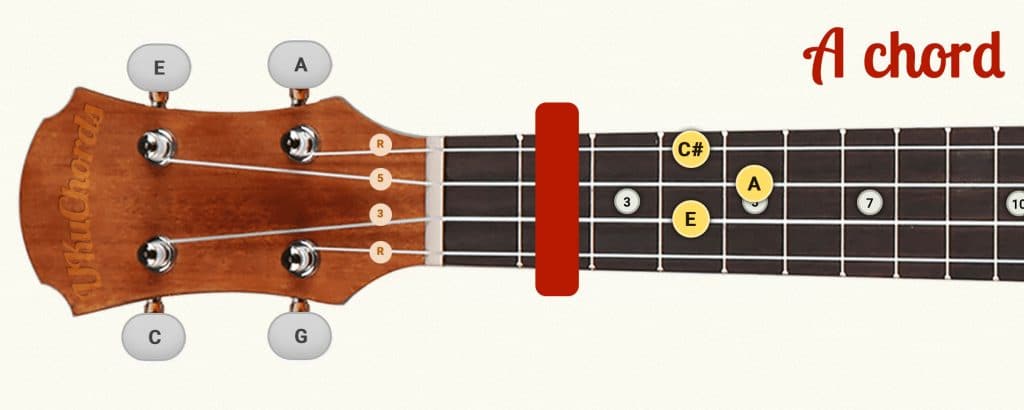
Para ilustrarlo, miremos dos acordes básicos de ukelele: C y G. Dos posiciones muy familiares, 0003 y 0232 respectivamente. Se usan típicamente en canciones en la tonalidad de Do.
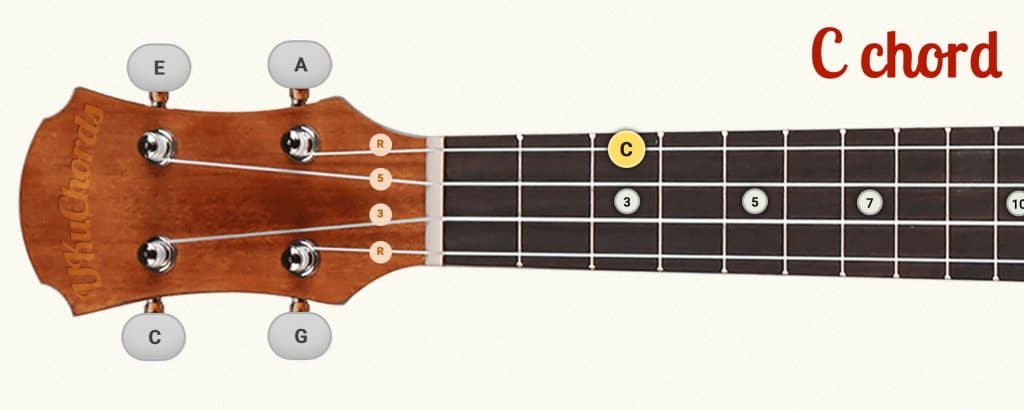
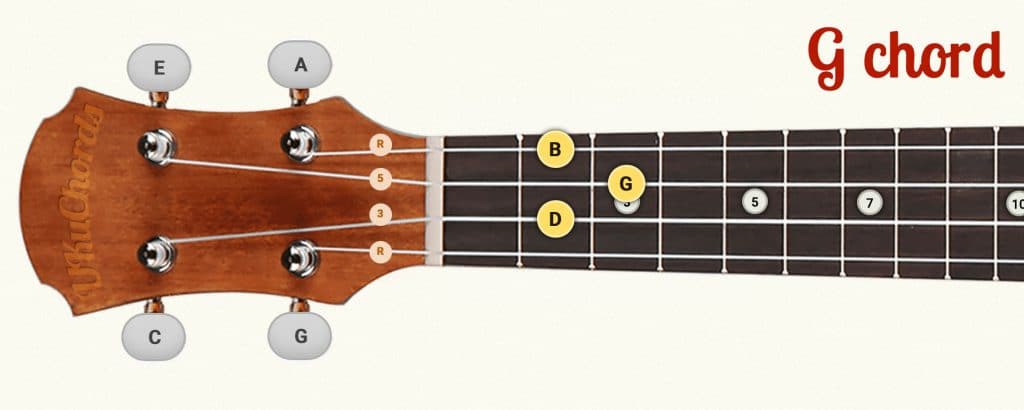
Cuando pones una cejilla en el segundo traste (cejilla 2 o capo II), la afinación de todo el ukelele se transporta dos semitonos hacia arriba. Toca las mismas posiciones de arriba y los acordes que estás tocando en realidad ahora son D y A.
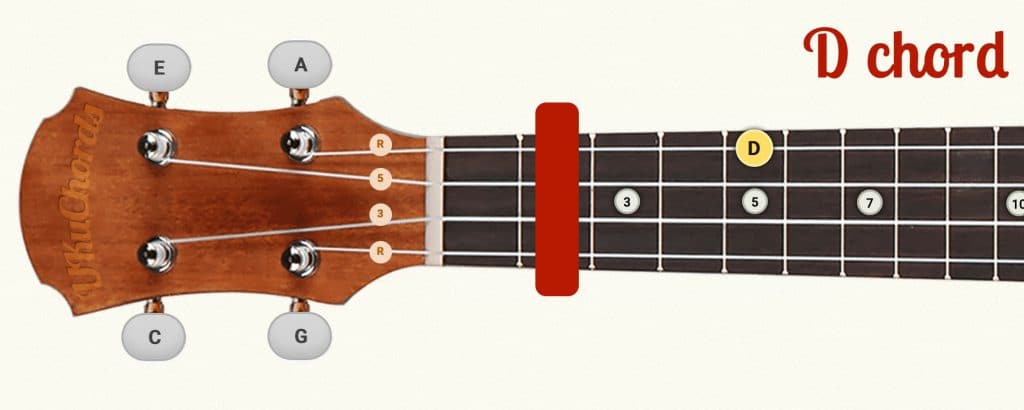
Una cejilla también ayuda cuando intentas ajustarte mejor al registro de un cantante. Subir la afinación de tu uke uno o dos semitonos suele bastar para que el cantante esté más cómodo.
Tabla de cejilla para ukelele
Cada traste sube la afinación un semitono. Coloca la cejilla justo detrás del traste, toca tus posiciones normales y sonarán más agudas en la cantidad indicada. Así, una cejilla en el segundo traste convierte tu posición de C en un D.
| Posición de la cejilla | La afinación sube | La posición de C suena como | La posición de G suena como |
|---|---|---|---|
| Traste 1 | 1 semitono | C♯ | G♯ |
| Traste 2 | 2 semitonos (1 tono) | D | A |
| Traste 3 | 3 semitonos | D♯ | A♯ |
| Traste 4 | 4 semitonos | E | B |
| Traste 5 | 5 semitonos | F | C |
| Traste 6 | 6 semitonos | F♯ | C♯ |
| Traste 7 | 7 semitonos | G | D |
Pasado el séptimo traste los trastes se estrechan mucho y el uke empieza a sonar fino, así que la mayoría se queda en el rango del 1 al 5. Cuando sepas en qué tonalidad has aterrizado, la herramienta de tonalidades gratuita lista todos los acordes que pertenecen a ella. Cejilla 2 con posiciones de C te pone en Re mayor, por ejemplo. Mi guía de tonalidades explica la teoría de detrás.
¿Cuándo se usa una cejilla en el ukelele?
Hay dos motivos principales para usar una cejilla. El primero es subir una canción a otra tonalidad para que encaje con tu registro vocal.
El segundo es este. En UkuTabs verás a veces la nota “alternative version” al principio de una canción. Significa que puedes probar a transportar la canción hacia abajo para que sea más fácil de tocar.
Por ejemplo: transportar un semitono abajo convierte un A#m en un Am, mucho más fácil de tocar. Pero si tocas encima de la grabación original, así no sonará bien. Para volver a la misma tonalidad, puedes poner la cejilla en el primer traste y seguir tocando el acorde Am. Ahora estás en la misma tonalidad que la grabación pero con acordes mucho más fáciles. No todos los acordes publicados con las canciones de UkuTabs requieren cejilla. Tú decides si quieres transportar la tonalidad y usar cejilla o no.
¿Necesito una cejilla para el ukelele?
Es una elección personal. Yo mismo usé bastante la cejilla cuando empecé con el ukelele, pero hoy en día no la uso nada. Cuando mejores, aprenderás a tocar ese A#m. También me resulta más fácil no depender de la cejilla al tocar canciones. Aun así, es una herramienta estupenda para quien empieza, porque te permite tocar un repertorio más amplio con la solución de transportar más cejilla.
¿Qué tipos de cejilla existen?
Cejilla de pinza con muelle
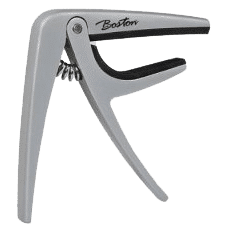
Es con diferencia mi tipo de cejilla favorito. El mango va con muelle y te permite cambiar la posición de la cejilla por el diapasón rápidamente con una mano. Eso sí, no puedes ajustar la presión sobre las cuerdas y tiende a abultar bastante. Te sugiero mirar las distintas marcas que ofrecen este tipo. Kyser es una marca conocida que vende una cejilla de ukelele/banjo muy decente por unos 25 a 30 $. Hay alternativas más baratas, como esta por debajo de 10 $ y con 5 estrellas en Amazon.
La cejilla de tornillo (C-clamp)
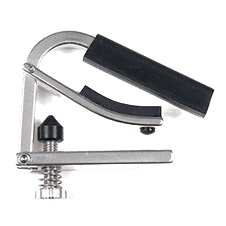
Hay un gran protagonista en el mercado de cejillas de tornillo para ukelele y es la Ukulele Capo de Shubb, disponible en varios colores. Una cejilla de tornillo te permite ajustar la presión sobre las cuerdas girando el tornillito. Se pone con la palanca. Son cejillas muy robustas, fiables y compactas. A cambio, son también las más caras.
La cejilla elástica o de trinquete
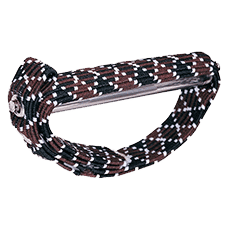
Antes eran las cejillas más baratas del mercado, pero últimamente han subido de precio. Puedes comprar una por lo mismo que una de muelle o de tornillo. Son muy ligeras y usan un sistema de muescas o elásticos para sujetarse al ukelele y apretar las cuerdas. Aunque su bajo coste y tamaño reducido son ventajas, la mayoría son de muy baja calidad, tienden a desafinar las cuerdas y se rompen con facilidad. Jim Dunlop ofrece una cejilla elástica de ukelele decente.
NS Ukulele Capo Pro

Esta es una de las cejillas más recientes: una cejilla específica para ukelele de D’Addario (alias Planet Waves). Es muy ligera, de aluminio, y ocupa muy poco en el mástil comparada con las demás (excepto la elástica). No es tan fácil de mover por el diapasón una vez puesta, pero ese es casi su único inconveniente. La PW-CP-12 NS es el último modelo.
Tengo una cejilla de guitarra. ¿Me sirve?
Claro que sí, nada te impide usar la cejilla de tu guitarra. Yo tengo una Jim Dunlop 88B negra de guitarra. Funciona perfectamente, aunque debo decir que ya casi no la uso. Si piensas usar cejilla en el ukelele con regularidad, yo iría a por una cejilla diseñada específicamente para ukelele.
Mi consejo: úsala para tu voz, no para esquivar acordes
Una cejilla puede venir muy bien, pero te sugiero usarla solo para cambiar la tonalidad del ukelele y ajustarla a tu voz. Toca de verdad los acordes originales. Intenta no depender de la cejilla al aprender canciones. Si te cruzas con una canción con un acorde desconocido, siempre puedes ver el diagrama al principio de cada canción o hacer clic en el acorde aquí en UkuTabs. Si no es una canción de UkuTabs, usa la biblioteca de acordes de UkuTabs para averiguar cómo se toca, o repasa las posiciones que todo el mundo debería saber.
Preguntas frecuentes sobre la cejilla
¿Puedo usar una cejilla de guitarra en un ukelele?
Sí. Una cejilla de guitarra agarra bien un ukelele, aunque muchas son más anchas y aprietan más de lo que necesita un mástil pequeño, lo que puede dejar las cuerdas ligeramente altas. Una cejilla específica de ukelele o una de pinza corta encaja mejor, pero la de guitarra sirve de sobra para empezar.
¿Qué hace una cejilla en el ukelele?
Se engancha a lo largo de un traste y acorta todas las cuerdas a la vez, así que todo el ukelele suena más agudo. Sigues tocando las mismas posiciones, pero suenan en una tonalidad más alta.
¿Se necesita cejilla para el ukelele?
No, la cejilla es opcional. Siempre puedes cambiar de tonalidad aprendiendo posiciones nuevas. La cejilla solo te deja subir la tonalidad al instante con las posiciones que ya conoces, útil para ajustar una canción a tu voz o tocar con una guitarra.
¿Cómo se usa una cejilla en el ukelele?
Abre la cejilla, colócala justo detrás del traste que quieras (no encima del metal) y ciérrala de forma que presione las cuatro cuerdas por igual. Rasguea para comprobar que todas suenan limpias y toca tus posiciones normales.
¿Dónde pongo la cejilla para tocar en una tonalidad concreta?
Cada traste sube la afinación un semitono, así que la tonalidad sube igual. Para subir un tono entero, por ejemplo de Do a Re, engancha en el segundo traste y toca tus posiciones de C. La tabla de arriba lista las posiciones comunes.
¿La cejilla desafina el ukelele?
Puede. Apretar demasiado o poner la cejilla encima del traste en vez de justo detrás deja las cuerdas altas. Ajústala firme pero sin apretar de más, y comprueba la afinación con el afinador gratis después de ponerla. Las cejillas elásticas baratas son las peores en esto.
Prueba tu cejilla con una canción
Pon la cejilla en el segundo traste, toca una canción que ya conozcas con tus posiciones de siempre y escucha cómo sube a una tonalidad más brillante. Somewhere Over The Rainbow es buena para probarla. Hay miles más en la lista de canciones fáciles de ukelele. Usa la biblioteca de acordes para consultar posiciones, la herramienta de tonalidades para ver qué encaja en la tonalidad a la que te has movido y el afinador de ukelele para afinar primero. No dudes en escribirme siempre que necesites más información sobre el uso de la cejilla.
Algunos enlaces de esta página son enlaces de afiliados de Amazon. Como socio de Amazon, UkuTabs obtiene una comisión por las compras que cumplan los requisitos, sin que ello te suponga ningún coste adicional.
What are some popular songs to play with a capo?