
Ukulele Sizes Explained: Soprano vs Concert vs Tenor vs Baritone
 by Jonas
Soprano, concert, tenor or baritone? Here is how the four ukulele sizes compare in sound, feel and tuning, so you can pick the right one for you.
There are four main ukulele sizes: soprano, concert, tenor and baritone. That is the whole family. The marketing makes them sound like wildly different instruments, but the gaps between them are smaller and simpler than that, a bit like shoe sizes. Same shape, same idea, just scaled up a step at a time.
Three of the four even share the same tuning, so a chord you learn on one carries straight to the next. In this guide I’ll walk you through how they differ in scale length, sound and feel, then help you pick the one that fits your hands and your goals.
The four sizes at a glance
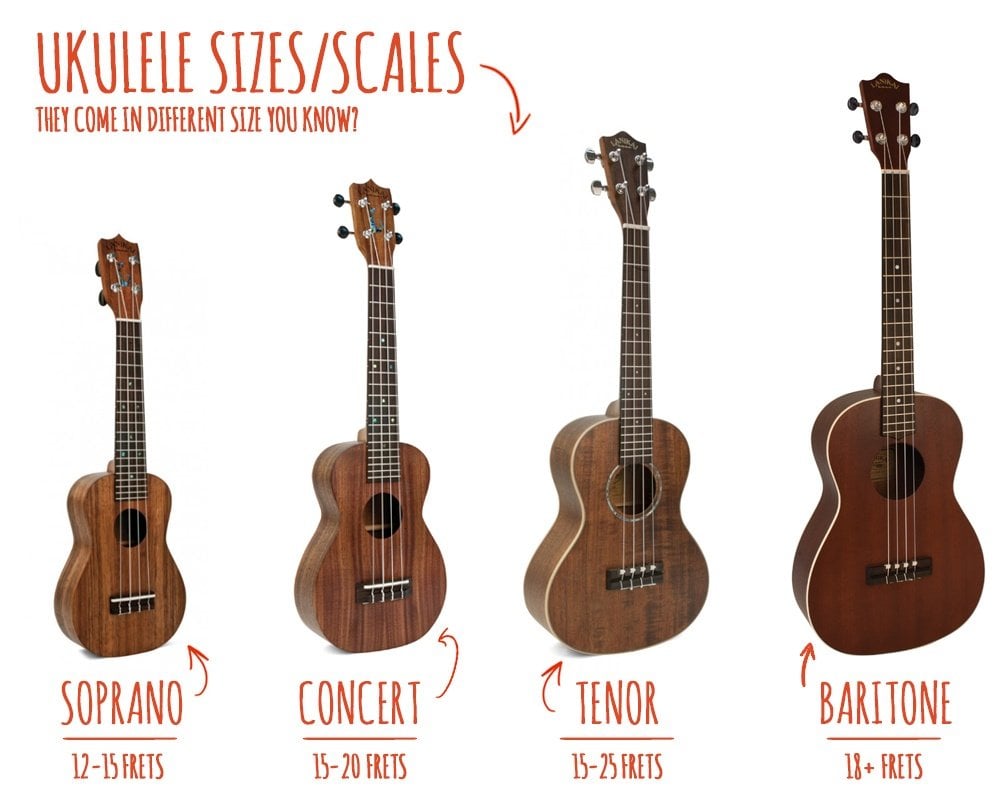
First things first, here is the quick version. The numbers are typical rather than exact, since every maker does things a little differently. Scale length (= the part of the string that actually vibrates, from the nut to the saddle) is the number that matters for how a ukulele feels under your fingers. The whole instrument is longer of course: a soprano measures around 21 inches (53 cm) in total and a baritone around 30 inches (76 cm).
| Size | Typical scale length | Common tuning | Sound character | Who it suits |
|---|---|---|---|---|
| Soprano | around 13″ (33 cm) | gCEA (high-G) | Bright, jangly, classic uke | Beginners, small hands, the traditional sound |
| Concert | around 15″ (38 cm) | gCEA (high-G) | Warmer and a touch fuller | Most people, comfier frets |
| Tenor | around 17″ (43 cm) | gCEA or low-G | Fuller, louder, more resonant | Performers, bigger hands, fingerpickers |
| Baritone | around 19″ (48 cm) | DGBE (low) | Deep, mellow, guitar-like | Guitarists, low warm tone fans |
Soprano, concert and tenor all share the same gCEA tuning, so the same chord shapes give you the same chords. You can move between them freely. Baritone is the odd one out and that is the whole point of it.
Soprano: the classic little uke
The soprano is the smallest of the bunch and the one most people picture when they hear the word ukulele. It has that bright, jangly, slightly toy-box voice that gave the instrument its happy reputation in the first place.
It is light, cheap and very portable. The catch is the short scale length, which puts the frets close together. If you have larger fingers you might feel a bit cramped up the neck. Tuning is standard gCEA, so every beginner chord chart on the site fits it perfectly.
Concert: the comfortable all-rounder
Bump up one size and you land on the concert. It is a little bigger than the soprano with more space between the frets, which most people find kinder on the hands. The tone is a touch warmer and fuller while still ringing out clearly as a ukulele.
Same gCEA tuning again. In my opinion, if you are not sure which to pick and you do not have tiny hands, the concert is the safe, happy middle. I started out on a concert myself and it is still a brilliant first ukulele if you want the traditional sound. It is the one I most often suggest to a first-time buyer.
Tenor: fuller, louder, a performer’s favorite
The tenor is bigger again, with a longer scale, wider fret spacing and noticeably more volume and resonance. It suits bigger hands, fingerpicking and anyone who wants a richer voice. It is the size I reach for most these days.
Tenors often come set up for low-G tuning, where the fourth string drops an octave below the usual high-G (= that string now sounds lower than the others instead of higher). That adds bass and a smoother run of notes, which is lovely for fingerpicking and instrumental pieces. You can string a tenor as high-G too, so you really do get the best of both worlds.
Baritone: the big, mellow, guitar-like one
The baritone is the largest of the four and the one that breaks the pattern. Instead of gCEA it is tuned DGBE, exactly like the top four strings of a guitar. That gives it a deep, warm, mellow tone with real low end.
If you already play guitar, the baritone feels like coming home, since those four chord shapes are ones you already know. The trade-off is that standard ukulele chord charts do not transfer directly, because the tuning is different. Do not worry, it is not a deal-breaker, it just means a baritone comes with its own learning curve. I have a whole guide for it, so head to the baritone ukulele guide before you buy one.
So which size should you pick?
No size is “better” than another. Think of it like choosing shoes: it comes down to your hands, your goal and your budget, not bragging rights.
Smaller hands, or buying for a child? Start with a soprano or concert. Larger hands, or fingers that feel cramped on a soprano? Step up to a tenor, or a concert at the very least.
For sound and intent it splits up cleanly too. If you want the classic happy ukulele jangle, go soprano. If you want one easy do-everything uke, go concert. If you are after volume, richness and room to fingerpick, go tenor. And if you already play guitar or you are chasing a deep mellow tone, baritone is your friend.
On budget, sopranos are usually the cheapest, with prices creeping up as the body gets bigger. If money is tight, a soprano or concert gets you playing for less. For a value-first first instrument, see my pick of the best cheap ukulele options in the buying guide.
If you genuinely cannot decide, get a concert. In my opinion it pleases most players, fits most hands and uses the same chords as the soprano and tenor.
Does size change how I tune?
Soprano, concert and tenor all use gCEA, so tuning is identical across the three. The tenor just gives you the extra option of low-G. Baritone uses DGBE, which is a different beast altogether.
Whichever you land on, get it spot on with the free online ukulele tuner and if you want the full picture read the tuning guide.
Wrapping up
I hope this guide has helped you sort out the differences between soprano, concert, tenor and baritone and given you a clear idea of which size fits you. Remember that chords learned on one gCEA uke carry straight over to the others, so you are never locked in.
Are you also wondering about budget, brands and what to actually look for on the shelf? When you are ready to buy, the buying guide will walk you through all of it. Keep on practicing and enjoy! Feel free to contact me whenever you need more information about ukulele sizes. Good luck and have fun!