Playing Ukulele Outside: How to Survive Beach, Campsite and Heatwave
 by Jonas
Summer is the best season to play ukulele and the worst season for the ukulele itself. What heat, sun, sand and humidity actually do to your uke, and how to play outside all summer without hurting it.
A ukulele is one of the most portable instruments there are, and summer is its season: beaches, campsites, park picnics, balcony evenings. But heat, sun and sand are genuinely hard on a wooden instrument. Every summer I get emails from players whose ukulele came back from holiday sounding wrong. So here is the guide to playing outside all summer long, without the sad ending.
Which ukulele should you take outside?
The blunt rule: take the uke you would not cry over. If you own two, the cheaper one just became your adventure uke. Laminate ukuleles, which most budget instruments are, handle temperature and humidity swings far better than solid wood, because laminate is layered and glued rather than one expanding-and-contracting plank. Solid-wood instruments sound richer at home, and that is exactly where they should stay in July.
Only own one good uke? It can still come along. The rest of this guide is how to keep it safe. And if this becomes your excuse to buy a knockabout second instrument, the best cheap ukulele guide has picks that sound way better than their price.
What do heat and sun actually do to a ukulele?
Wood moves. Heat and dryness make it shrink and crack, humidity makes it swell. Rapid swings between the two are the real killer. That shows up as tuning drift first, then buzzing or a changed action and in the worst case as seam cracks or lifting glue joints.
Three rules cover almost all of it:
- Never leave it in a hot car. A parked car in the sun is an oven and that can soften the glue. This is the most common way ukuleles die in summer.
- Keep it out of direct sunlight when you are not playing. Under a towel, in its bag, in the shade. Sun fades the finish and cooks the top.
- Let it acclimatise. Coming from an air-conditioned room into afternoon heat? Give it a few minutes in the bag before tuning up, so you tune the uke it is about to be, not the one it was indoors.
If your uke already drifts or buzzes after a hot trip, the won’t stay in tune and fix buzzing guides walk you through the diagnosis.
How do you keep it in tune outdoors?
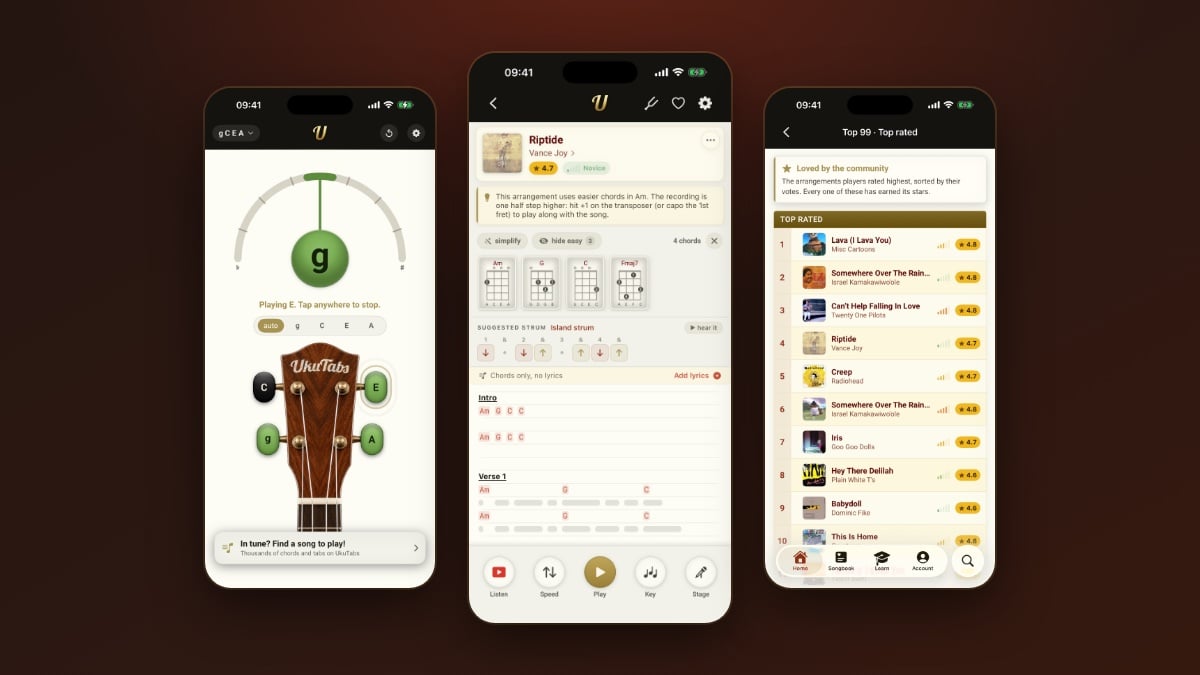
Accept that you will retune more, that is physics, not failure. Temperature changes detune every string instrument, so check your tuning at the start of every session and again when the sun goes down and the air cools. The free UkuTabs tuner works on your phone right in the browser, and the UkuTuner iPhone app does it offline on the beach, no signal needed.
Strings matter too: fluorocarbon strings shrug off temperature swings noticeably better than nylon, which is worth knowing if your summer uke lives outside. The strings guide covers the difference.
What about sand, water and sunscreen?
Sand is grit and grit plus tuning pegs or fretboards is a bad combo. Sunscreen and sweat leave a film that gunks up strings within days. None of it is dramatic, all of it is cumulative: give your ukulele a quick wipe with a dry cloth after every beach session, strings included and keep it on a towel rather than directly in the sand. Salt air on a multi-week coastal trip? Wipe more. The full routine lives in the ukulele care guide.
And what should you play out there?
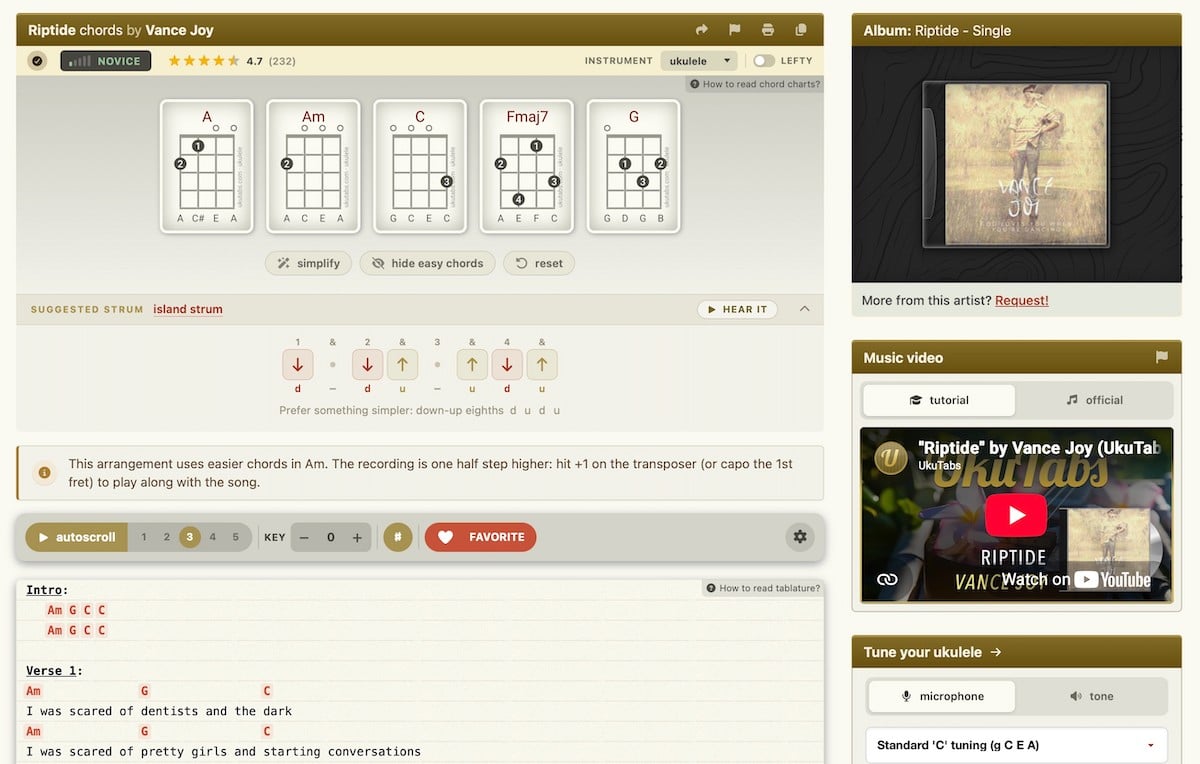
The whole point of dragging a uke outside: songs everyone can join. That is literally why the Top 10 Campfire Songs for Ukulele exists, three-chord singalongs sorted easiest first. If singing while strumming still trips you up, fix that before the trip with the sing and play guide, campfires are unforgiving audiences.
Travelling further than the local park? Flights, humidity swings and packing strategy get their own treatment in the travel with a ukulele guide.
Frequently asked questions
Can heat really damage a ukulele?
Yes, mostly through glue and wood movement. A hot car is the classic killer: glue joints soften, tops warp, seams open. Shade, a bag and never the parked car, and your uke will be fine.
Is a cheap ukulele better for the beach?
Usually, yes. Cheap ukes are typically laminate, and laminate handles heat and humidity swings much better than solid wood. Bonus: if the worst happens, it cost less than the parking ticket.
Why does my ukulele go out of tune faster outside?
Temperature. Strings and wood both expand and contract as it changes, and outdoors it changes constantly. Retune at the start of each session and after sundown, and consider fluorocarbon strings, which drift less.
What are the best songs to play at a campfire?
Songs with few chords and choruses everyone knows. The campfire songs list collects the ten best, ordered easiest first, each with chord diagrams and a free sheet.
Summer is short. Take the uke outside, let people sing along and just bring it home in one piece. Keep on uke’ing!