
How To Tune A Ukulele Properly
 by Jonas
Standard ukulele tuning is G, C, E, A, tuned from the 4th string to the 1st (gCEA, with a high G). The quickest way to tune is a clip-on tuner or the free UkuTabs online tuner. You can also tune by ear with relative tuning, or match the notes on a piano.
Standard ukulele tuning is G-C-E-A. There are four ways to get there: the free UkuTabs online tuner, the UkuTabs tuner app on your phone, a clip-on tuner, or your own two ears. This guide walks through all four, starting with the notes you are aiming for. New to all of this? My ukulele tips for beginners cover the ten habits that make everything below easier.
What are the open strings?
A ukulele in standard tuning has its four open strings tuned to G, C, E and A. Those are the notes you are tuning towards, whichever method you use.
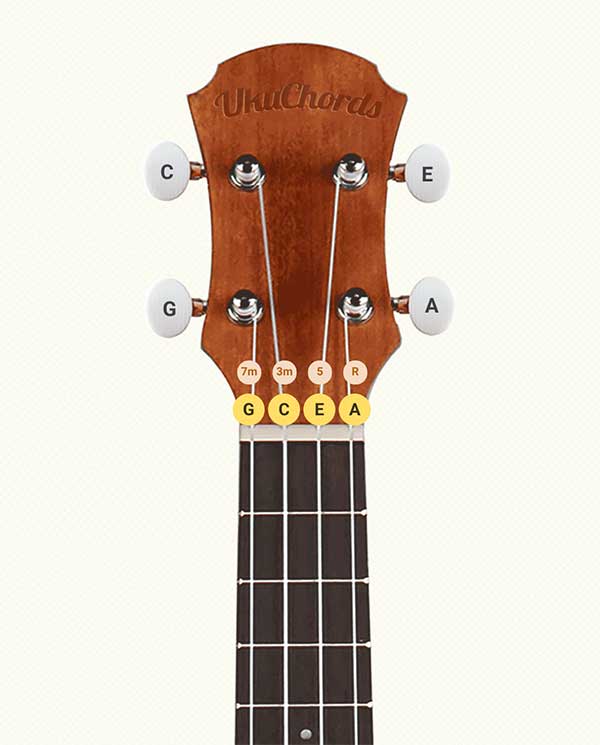
- G: 4th string (the one furthest from the floor when you play)
- C: 3rd string
- E: 2nd string
- A: 1st string (closest to the floor)
On most ukuleles that G is tuned higher than the C, not lower, which is what gives the ukulele its bright, jangly sound. That is called high-G or reentrant tuning and it is written gCEA with a small g. Playing in low-G instead? Have a look at my low-G versus high-G guide. For every other tuning a ukulele can take, the different ukulele tunings guide has the full list.
The quickest way: the free online tuner
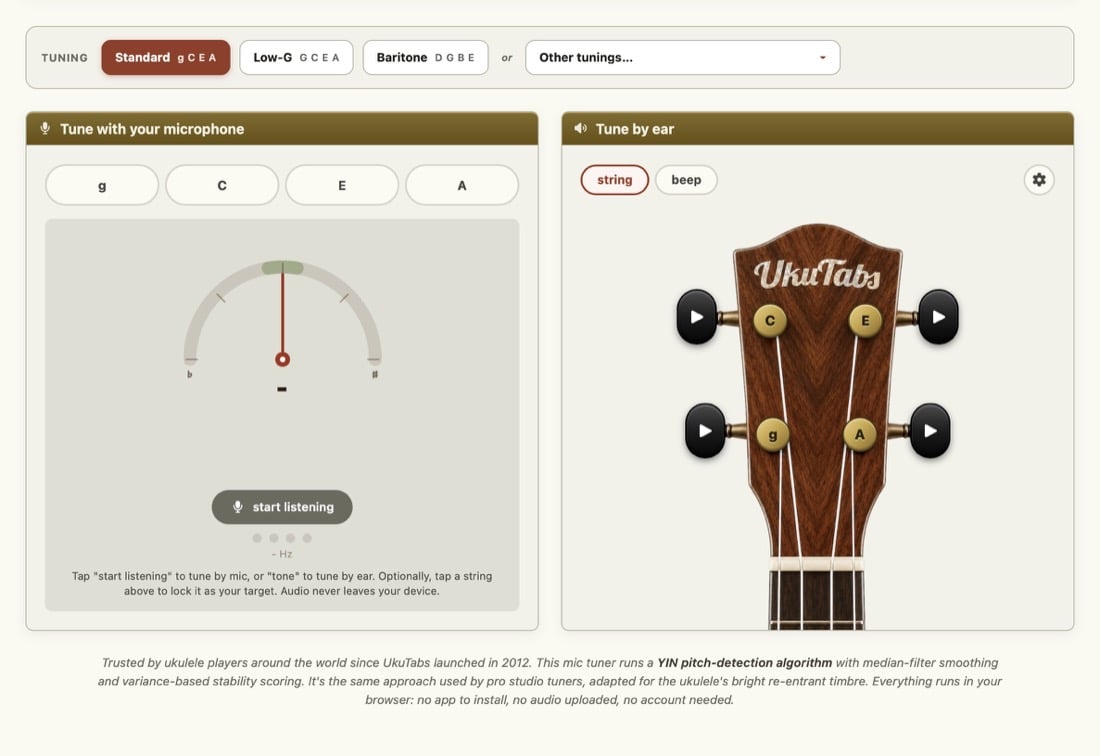
If you have a browser open, you are about thirty seconds from being in tune. The free UkuTabs ukulele tuner listens through your microphone and tells you which string you are playing and whether it is sharp or flat. You can also tap the pegs on screen to ring out each note and tune by ear against it, or switch to a plain beep if you find that easier to hear. It covers standard gCEA, low-G, baritone, D tuning and a pile of alternates.
Tune on your phone with the UkuTabs app
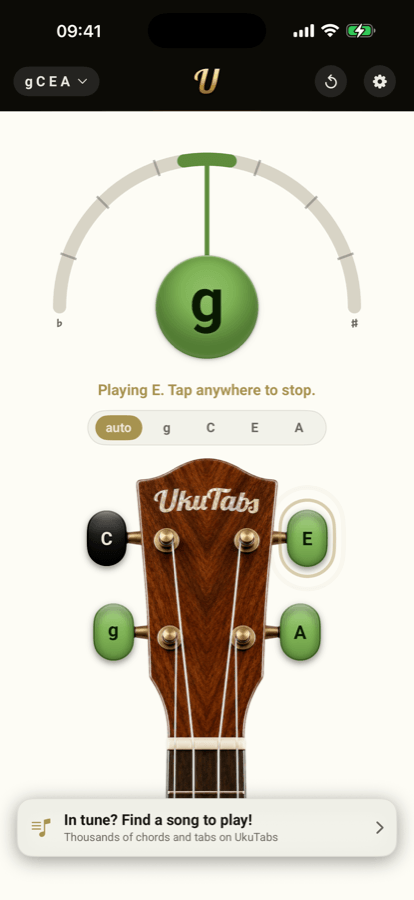
I built the UkuTabs Tuner app because I wanted the tuner I actually use myself: free, no ads, no account and it works completely offline, so it tunes just as well on a beach or in a rehearsal room with no signal. It listens to your strings, works out which one you are playing on its own and shows you exactly how far off you are. It handles high-G, low-G, baritone, D tuning and a full chromatic mode. When all four strings go green it offers you a song to play.


Clip-on tuners
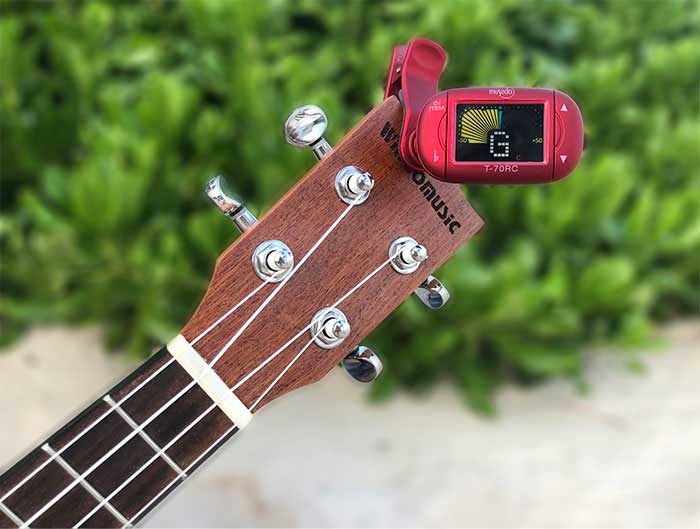
A clip-on tuner is the one bit of gear I would still recommend buying. It reads the vibration of the wood rather than the sound in the room, so it works in a noisy hall or a group class where a microphone tuner struggles. Clip it to the headstock, pluck a string and turn the peg until the display centers.
| Tuner | Type | Approx price | Best for |
|---|---|---|---|
| Snark SN6X | Clip-on, ukulele | $15-20 | The easy default for ukulele |
| Snark ST-2 | Clip-on, chromatic | $15-20 | Tuning other instruments too |
| Korg TM-60 | Tuner + metronome | ~$30 | Practice, tuning and timing in one |
How to tune a ukulele by ear
No tuner, no phone, no piano? You can still get all four strings sounding right together by tuning them against each other. This is called relative tuning. The catch is that it only makes the ukulele in tune with itself, so it is perfect on your own and not good enough for playing along with a recording or with other people. Here are the four steps.
- Start from the A string. Everything gets tuned against your 1st string, the A. Get it as close as you can by ear, or borrow the note from any reference you trust. Because the whole ukulele is then built on that one string, this method is only as accurate as your starting A.
- Tune the E string. Hold down the 5th fret of the E string (2nd string) and pluck it. That note is an A. Play your open A string straight after it, then turn the E string’s peg until the two sound identical.

- Tune the C string. Hold down the 4th fret of the C string (3rd string). That note is an E. Compare it with the open E string you just tuned and adjust the C peg until they match.
- Tune the G string. On a standard high-G ukulele, hold down the 2nd fret of the G string (4th string). That note is an A. Compare it with your open A string and adjust the G peg until they match.
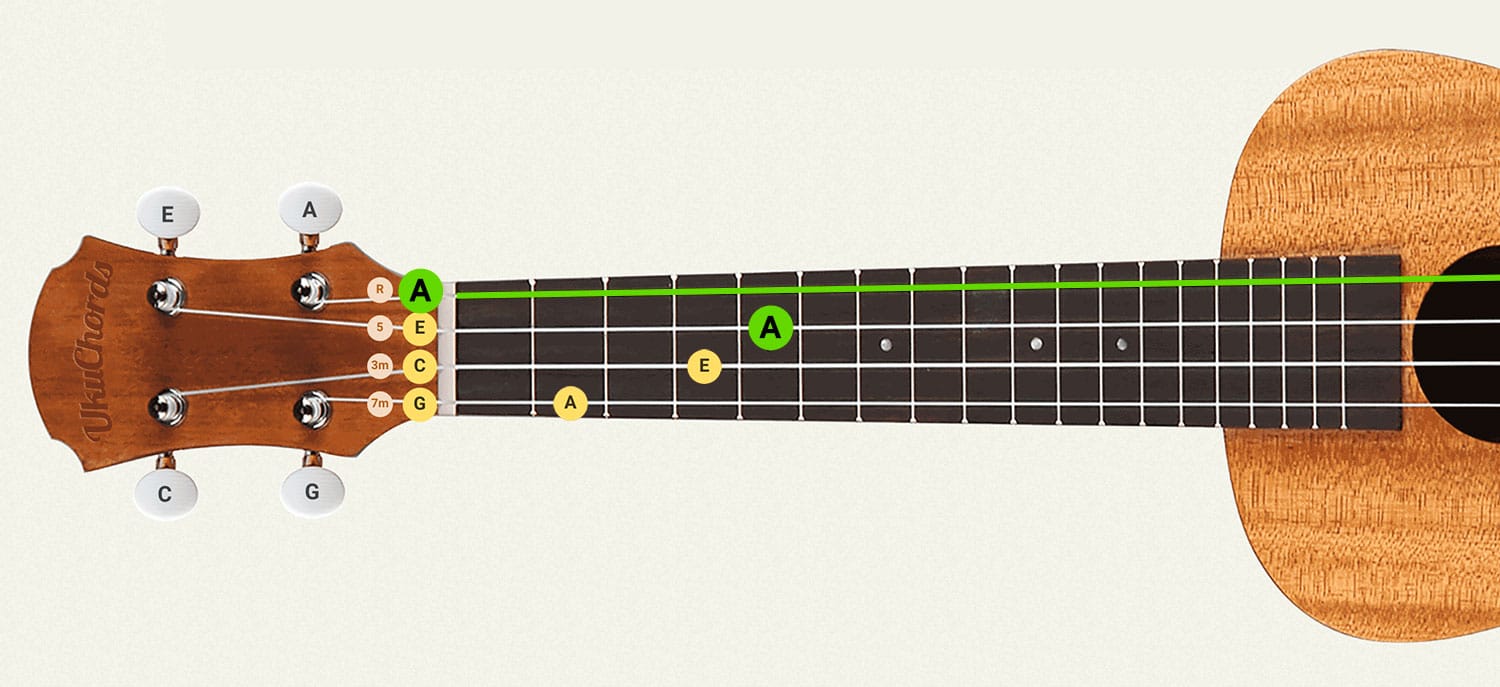
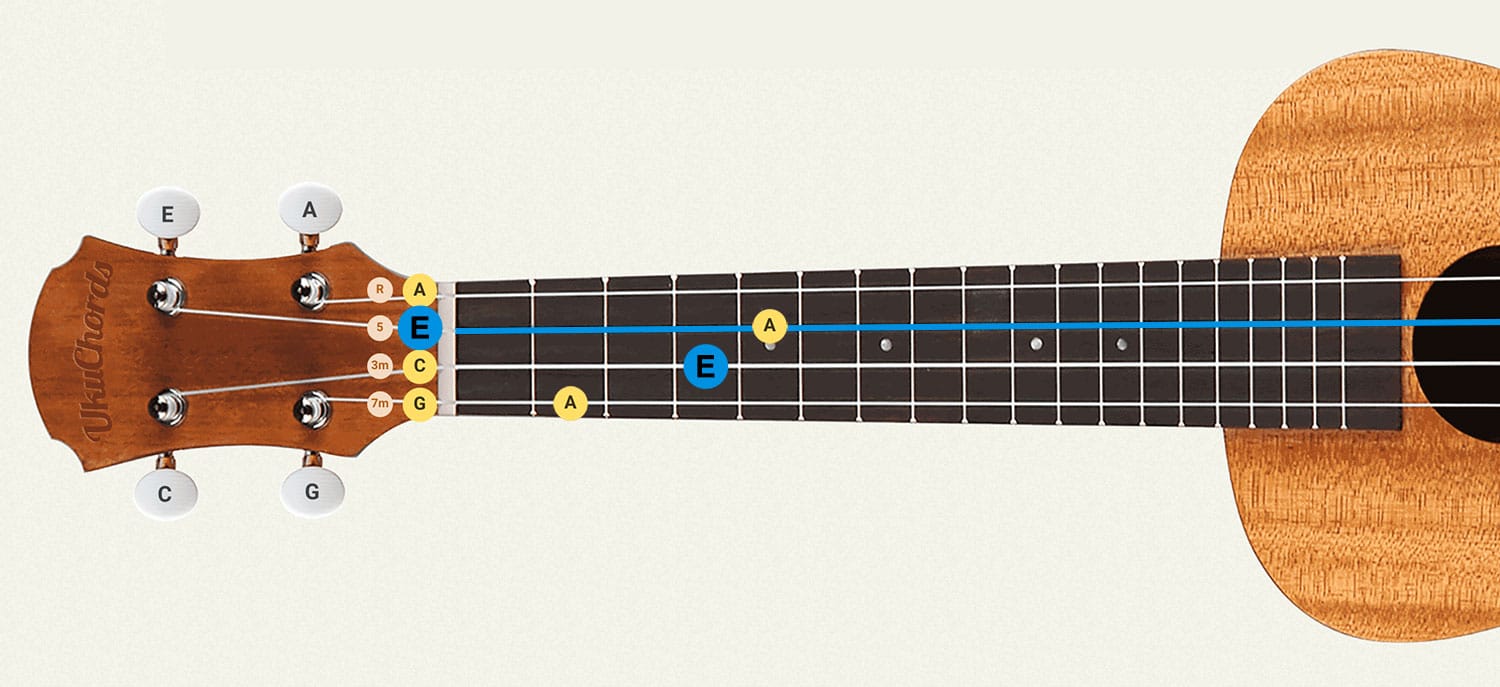
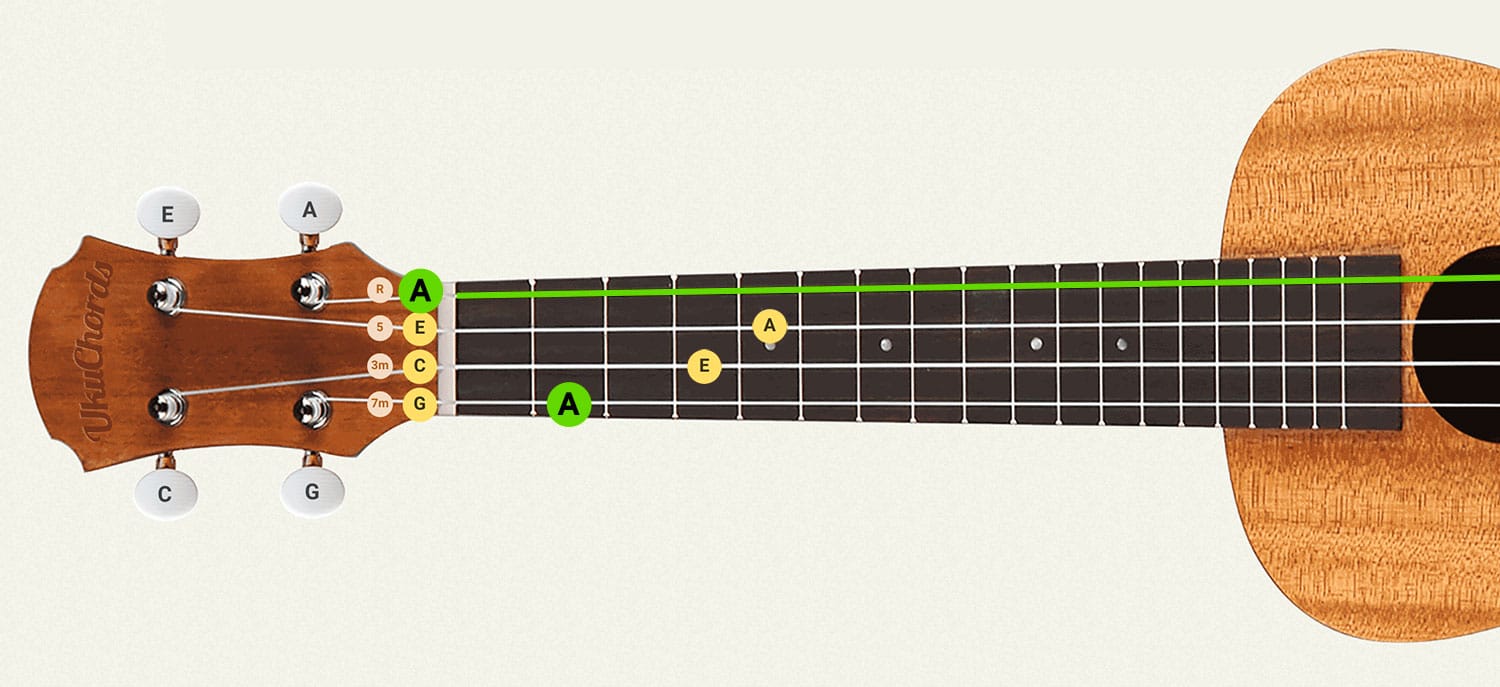
Playing low-G? That last step changes. Hold the 5th fret of the G string instead, which gives you a C, then match it against your open C string.
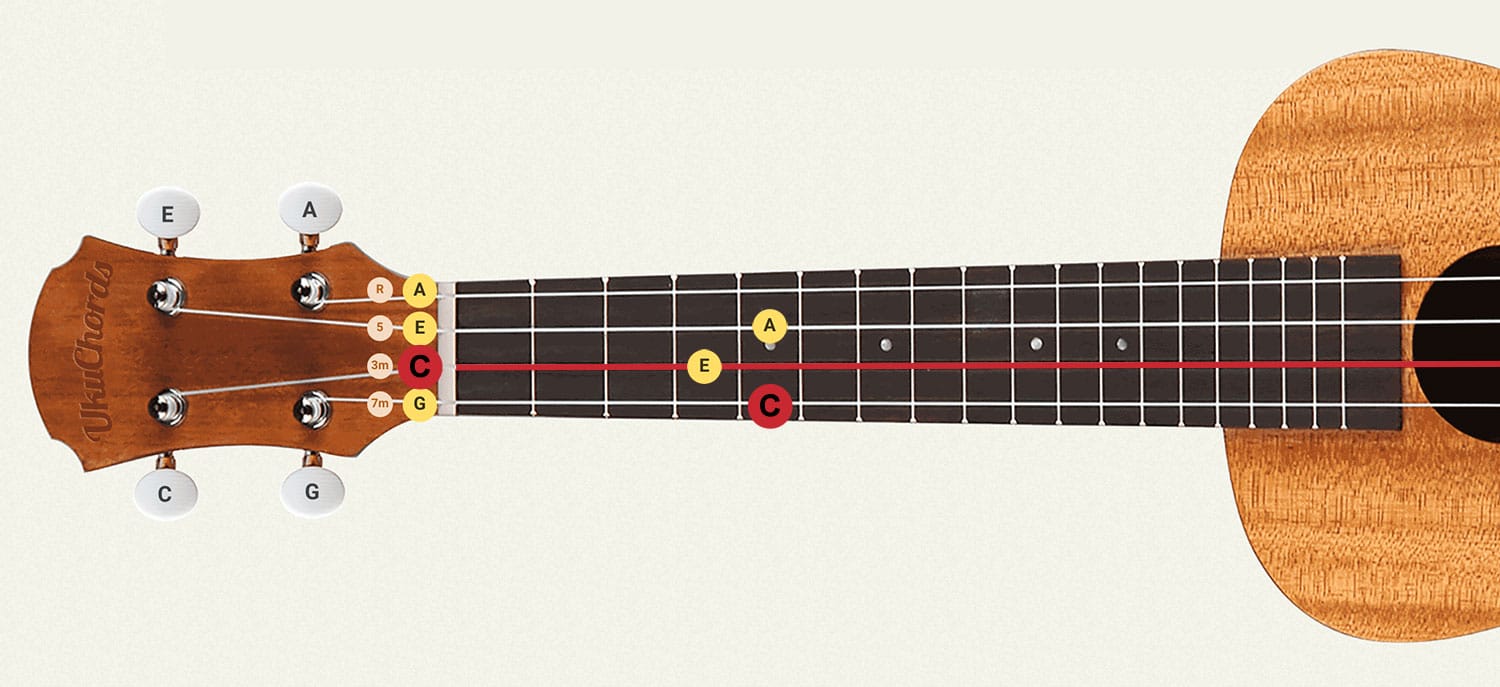
It takes a bit of practice to hear when two notes are truly the same rather than nearly the same. Listen for the wobble between them. When it disappears you are there. Once you know your notes on the fretboard you can invent your own combinations to check with.
Tuning with a piano or keyboard
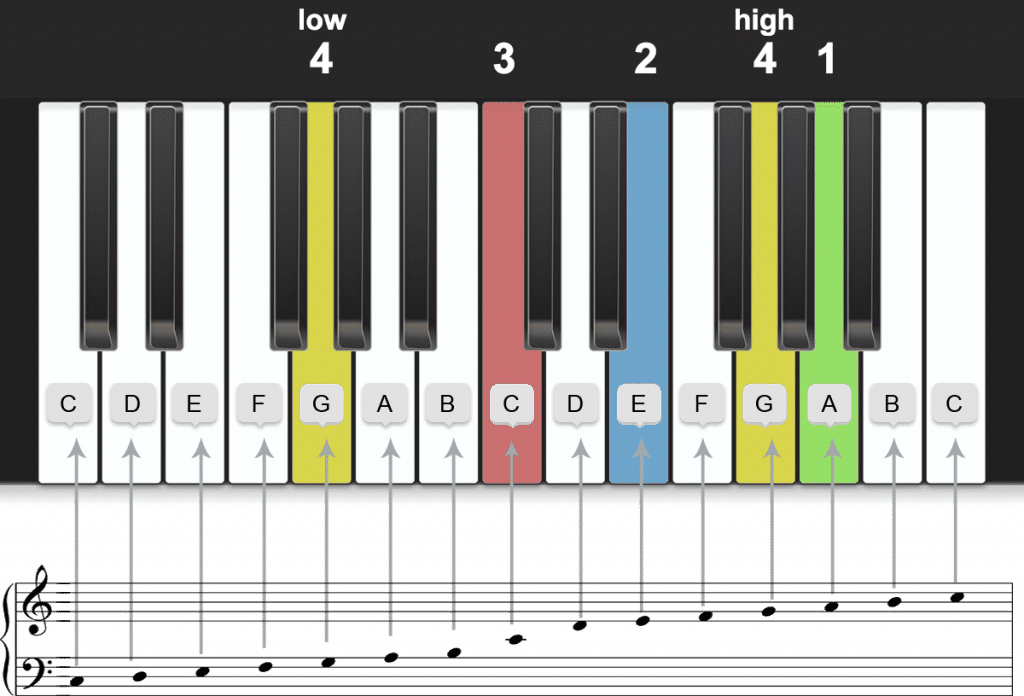
A piano is a reliable reference, so if there is one in the room you can use it instead of a tuner. Play G, C, E and A on the keyboard and match each open string to its note by ear. The diagram below shows exactly which keys those are, with the matching string number above each one. On a low-G ukulele, play that G an octave lower.
Can’t get it in tune?
If you have an older ukulele, or a brand new one that was never set up properly, you might find it will not sit in tune at all. Nine times out of ten the fix is simple: tighten the small screws on the tuning heads a little.
Still drifting after that? I wrote a whole guide on why a ukulele won’t stay in tune, covering the six usual causes and their fixes. If the strings buzz or rattle while you play, that is a different problem and the buzzing and rattle guide sorts it. And if the strings were never wound on correctly in the first place, my guide to changing ukulele strings shows you how it should be done.
Common questions
What notes is a ukulele tuned to?
G, C, E and A, from the 4th string to the 1st. This is called C tuning and it is what almost every ukulele song is written for.
How do I tune a ukulele without a tuner?
Tune the strings against each other, which is called relative tuning. Fret the 5th fret of the E string to get an A and match it to your open A string, then the 4th fret of the C string to get an E, then the 2nd fret of the G string to get an A. Your ukulele will then be in tune with itself.
What is the difference between high-G and low-G?
High-G tunes the 4th string above the C string, which gives that bright, classic ukulele jangle. It is written gCEA with a small g. Low-G drops that same string an octave below the C, written GCEA with a capital G, for a deeper range that fingerpickers and melody players prefer. My low-G versus high-G guide compares them properly.
Which fret do I use to tune a ukulele by ear?
The 5th fret of the E string and the 2nd fret of the G string both give you an A to match against your open A string. The 4th fret of the C string gives you an E to match against your open E string. On a low-G ukulele use the 5th fret of the G string, which gives a C.
How often should I tune my ukulele?
Every time you play. Nylon strings drift with temperature and humidity, plus a brand new set will keep stretching for the first week or so, which means retuning several times a session at first. That settles down.
Why does my ukulele keep going out of tune?
New strings stretching is the most common reason, followed by temperature and humidity swings, loose tuning pegs and strings that were not wound on securely. The won’t-stay-in-tune guide works through all six causes.
Need more input?
Whichever method you picked, the important bit is doing it every single time you pick the ukulele up. Keep the free tuner bookmarked or the app on your home screen, so it becomes a five-second habit rather than a chore. Feel free to contact me whenever you need more information about tuning your ukulele. Now go and play something: the easy ukulele songs are right there waiting.
Some links on this page are Amazon affiliate links. As an Amazon Associate, UkuTabs earns from qualifying purchases at no extra cost to you.
hiiiiiiiiiiii
hi
to get to the tuner on the left side of your screen the next to the bottom picture will say online tuner and then just klick on to that
If I join ukutabs can I print out the the lyrics and chords?
hi
Just started playing and having trouble with the tuning, I have w ukuleles, one old one that’s hopefuly in proper tune (gcea) and I’m using it as reference to tune my tiny, new (unfortunately hand made) ukulele that I stringed myself following a tutorial. Hasn’t worked so far and really far off, may be a problem in the stringing. Any advice?
How do I play the Ukulele if I am right handed
Con que cuerdas, que no sean de Uke Baritono se puede lograr una afinación gCEA o GCEA?
No consigo las cuerdas correctas. Con las cuerdas de la guitarra logro una buena afinación en uke tenor y concierto, pero no en Baritono, ya que se rompe o el uke o la 1era.?
How do you get to the tunner
It’s not teaching me anything