
How To Tune Your Ukulele Properly
 by Jonas
·
by Jonas
·
Standard ukulele tuning is G, C, E, A, tuned from the 4th string to the 1st (gCEA, with a high G). The quickest way to tune is a clip-on tuner or the free UkuTabs online tuner. You can also tune by ear with relative tuning, or match the notes on a piano.
Standard ukulele tuning is G-C-E-A. The fastest way to get there is a tuner, and the free UkuTabs ukulele tuner does it in your browser. If you have nothing to hand, you can also tune by ear. Here is every method, quickest first.
What are the open strings?
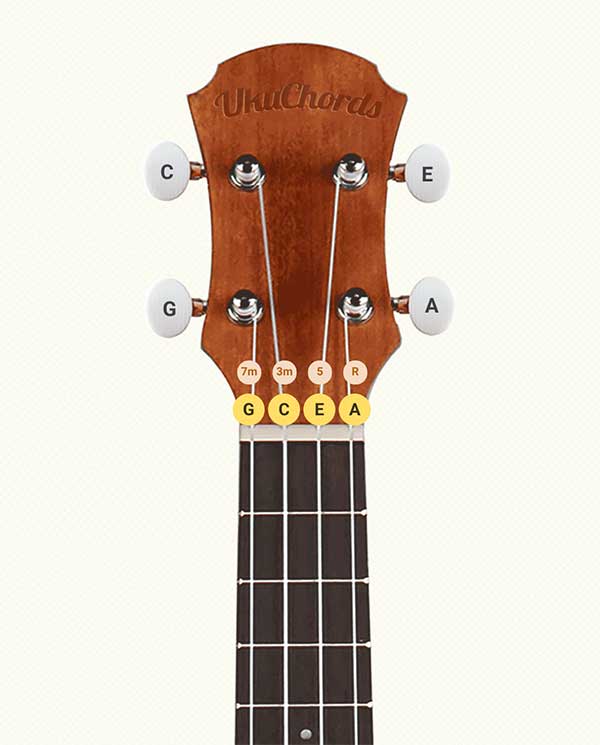
The open strings of the ukulele are as follows:
- G: 4th string (the furthest left on the fretboard)
- C: 3rd string
- E: 2nd string
- A: 1st string
This is when you have your ukulele in standard tuning, which is what you need to play most songs.
How to use UkuTabs ukulele tuner
The UkuTabs ukulele tuner supports the most popular ukulele tunings. Standard tuning is gCEA, which is the most common ukulele tuning. The tuning aDF#B (called D tuning) is shifted two frets, and brings out a sweeter ukulele tone. The dGBE tuning is more common for larger (baritone) ukuleles, and it will give you the same root notes as the top four strings on a guitar. Several other more exotic tunings are available as well.
| Tuning | Notes (4th to 1st string) | Best for |
|---|---|---|
| Standard / C / high-G | G4 C4 E4 A4 | The classic bright ukulele sound, most songs |
| Standard / C / low-G | G3 C4 E4 A4 | Deeper range, fingerpicking and melody |
| D tuning | A4 D4 F#4 B4 | A sweeter, brighter tone (older soprano style) |
| Baritone | D3 G3 B3 E4 | Baritone ukuleles, same as a guitar’s top four strings |
Half-step and full-step tunings and a few exotic ones are also in the tuner. For the full rundown see the different ukulele tunings guide.
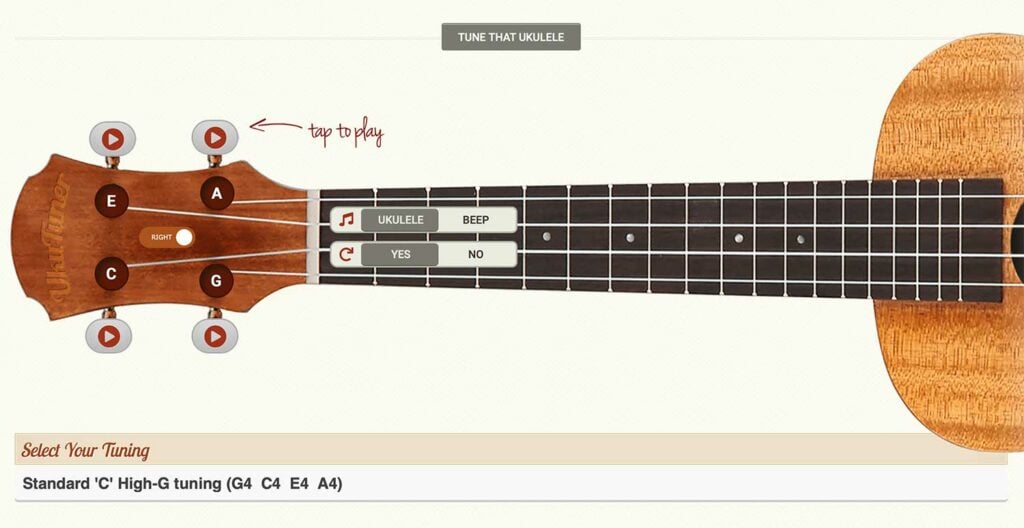
Once you have selected a tuning, simply tap on the tuning pegs to ring out the root note for each string. Listen carefully and tune your ukulele to that note by ear. Some people find a monotone beep easier to tune to. Select ‘beep’ if you want to use that sound instead of the natural ukulele strings. Go check it now and get that ukulele in tune!
Electronic tuning
| Tuner | Type | Approx price | Best for |
|---|---|---|---|
| Snark SN6X | Clip-on, ukulele | $15-20 | The easy default for ukulele |
| Snark ST-2 | Clip-on, chromatic | $15-20 | Tuning other instruments too |
| Korg TM-60 | Tuner + metronome | ~$30 | Practice, tuning and timing in one |
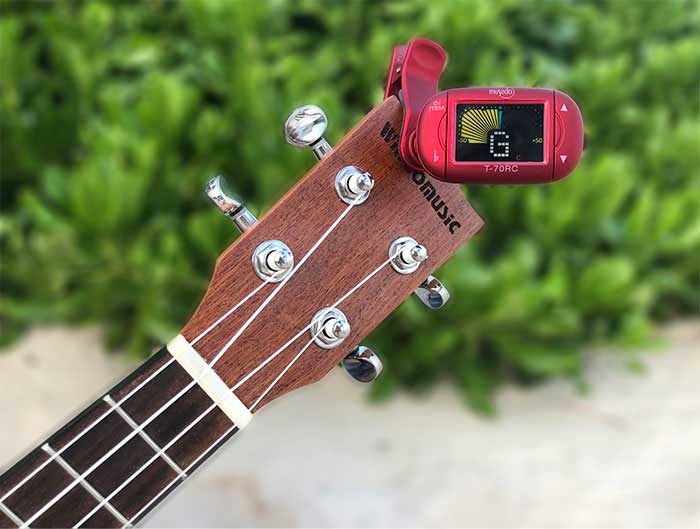
Tuning your ukulele with an electronic tuner is pretty straightforward. You put the tuner on your lap or clip it onto the headstock and pluck the strings. It will then show the note you are playing. Use the tuning pegs to adjust the tension of the string until you get the desired note.
Ukulele tuner apps for your phone
Can you use your phone to tune your ukulele? Yes you can! There are apps that basically use the same principle as electronic tuners. You can easily download them on your smartphone and there are tons of them for both iOS as android.
While the paid ones tend to be more user-friendly and can offer you different tunings, the free ones work the same way. This is very convenient for on-the-go tuning, and it can be a much cheaper alternative. Some popular tuning apps are: Pitched Tuner and gStrings Tuner.
Relative ukulele tuning method for tuning a ukulele
With relative ukulele tuning, all four strings are tuned relative to each other. This is a method you can use when you have no other means of tuning your ukulele. It is a good choice if you are playing on your own and you want to have all your strings sound right together, but it isn’t that accurate and might cause issues if you are playing with other people. The relative ukulele tuning method can be broken down into four steps.
- Start with the A string
You will use the first string (A) as a reference to tune the other three strings, which is why this method isn’t that accurate. You won’t notice any problems if you are playing alone, but you will if you play along with songs or with your friends.
- Adjust the E string
Place your finger just behind the fifth fret on the E string (second string). That note is an A. When you pick the first string (A), it should sound the same. Adjust the second string with the tuning pegs on the headstock until the two strings sound the same.

- Adjust the C string
Now place your finger just behind the fourth fret on the C string (third string). That note is an E. When you pick the second string (E), it should sound the same. Adjust the third string with the tuning pegs on the headstock until it sounds the same as the second string. By now you will have noticed that tuning a ukulele is kind of fun.
- high G relative tuning
Most ukuleles come with a high G string as standard. Place your finger just behind the second fret on the G string (fourth string). That note is an A. When you pick the first string (A), it should sound the same as the A on the G string. Adjust the fourth string with the tuning pegs on the headstock until the two strings sound the same.
- low G relative tuning
To tune a ukulele with a low G string, place your finger on the fifth fret on the G string (fourth string). That note is a C. When you pick the third string (C), it should sound the same. Adjust the fourth string with the tuning pegs on the headstock until the two strings sound the same.
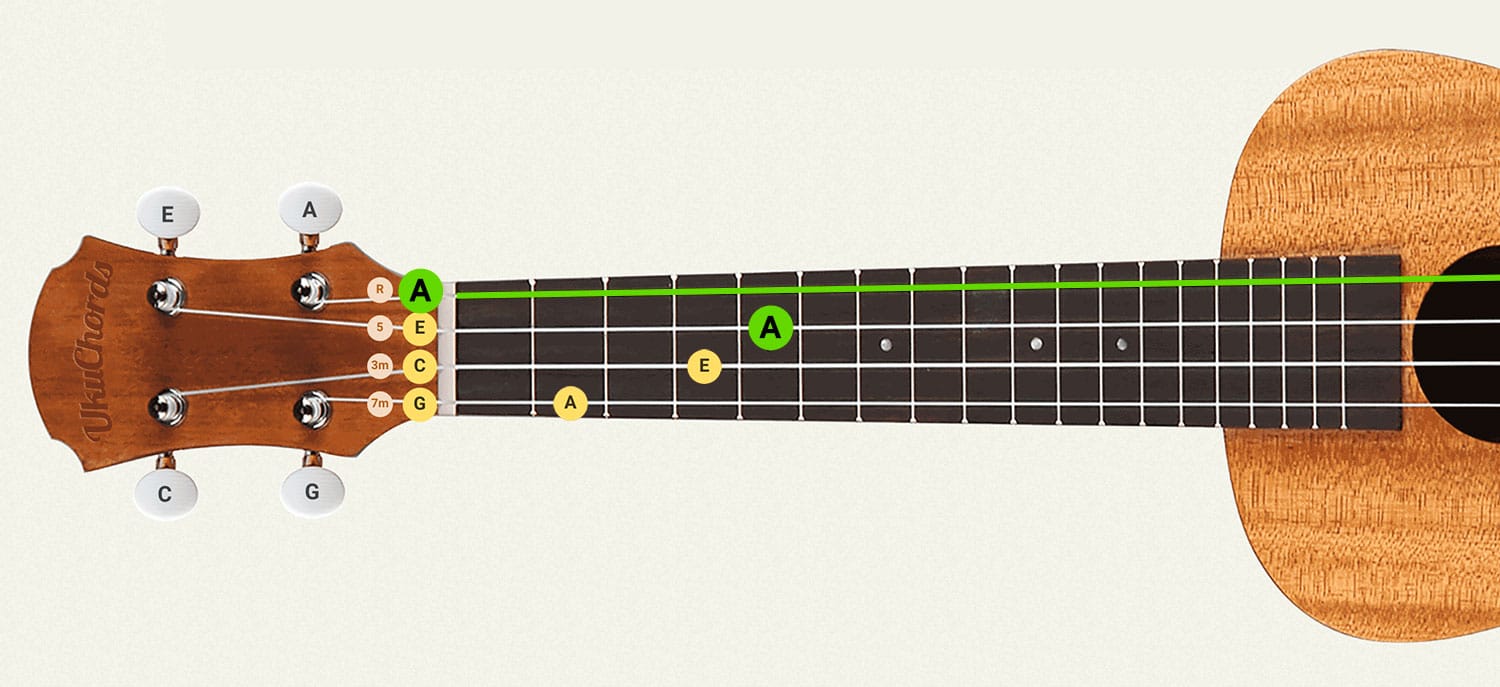
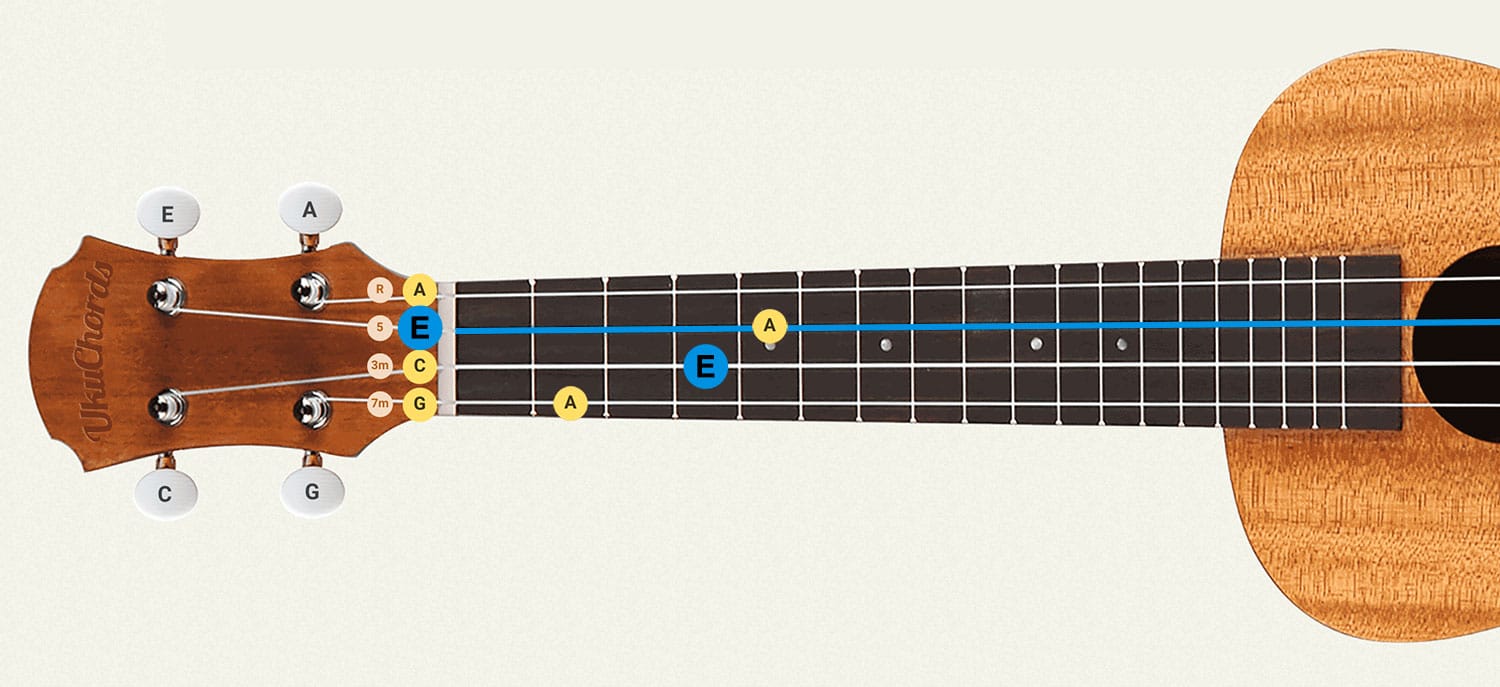
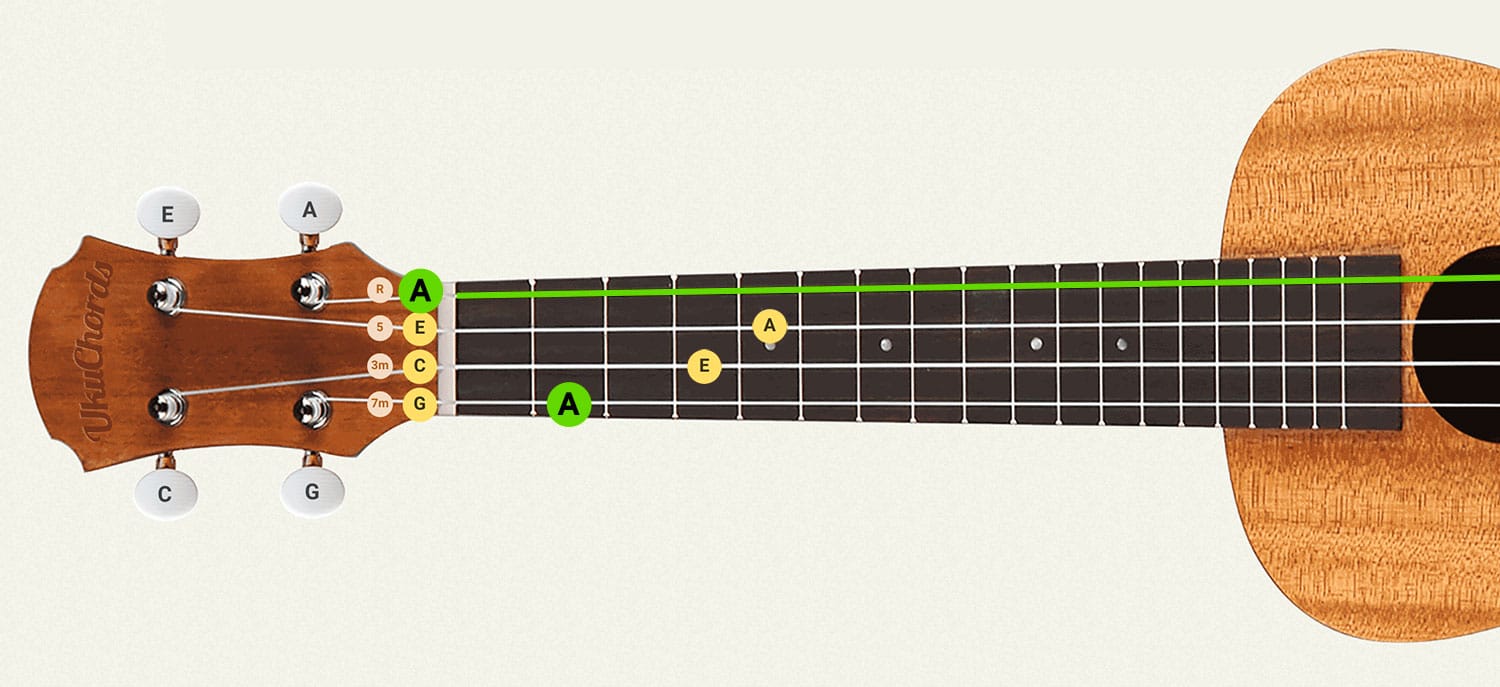
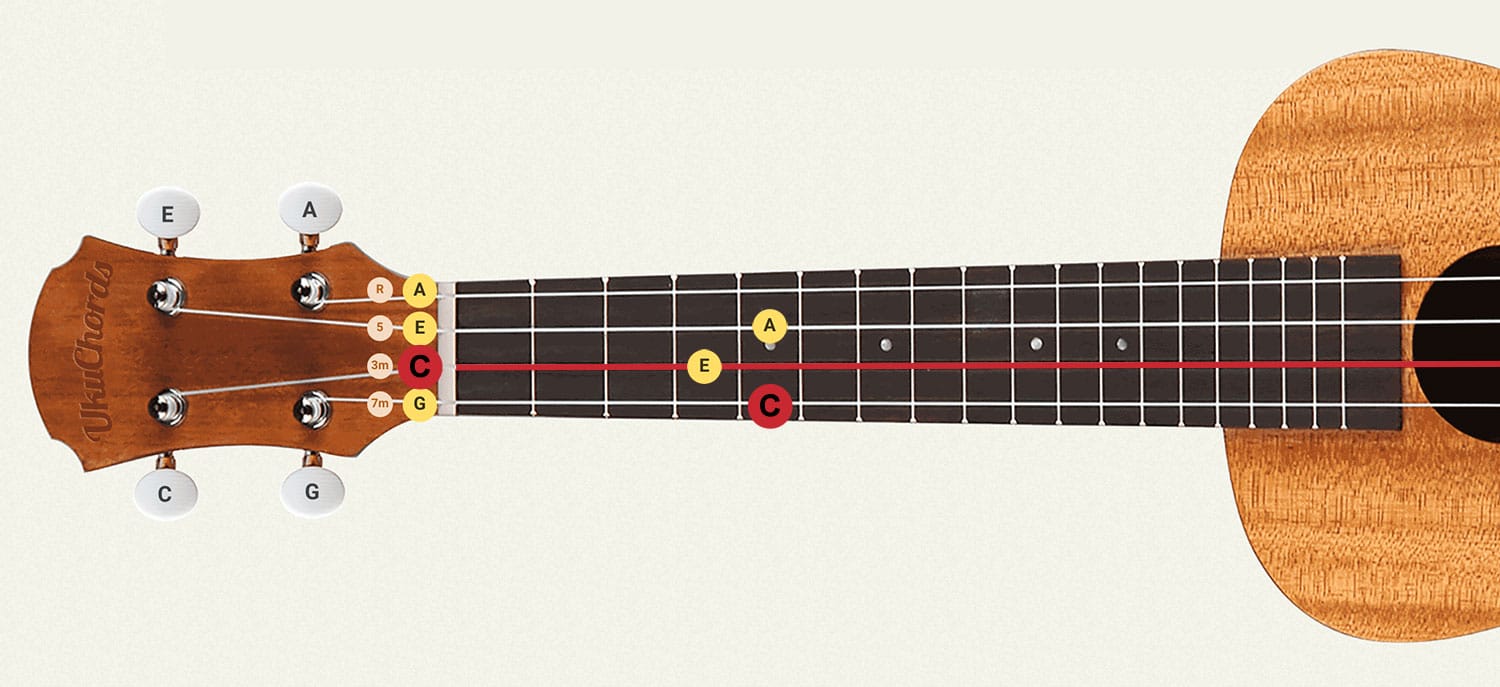
It might take some practice to train your ear, but this is actually an easy way to tune your ukulele quickly. If you know your notes on the fretboard you could also come up with other combinations.
Piano Tuning
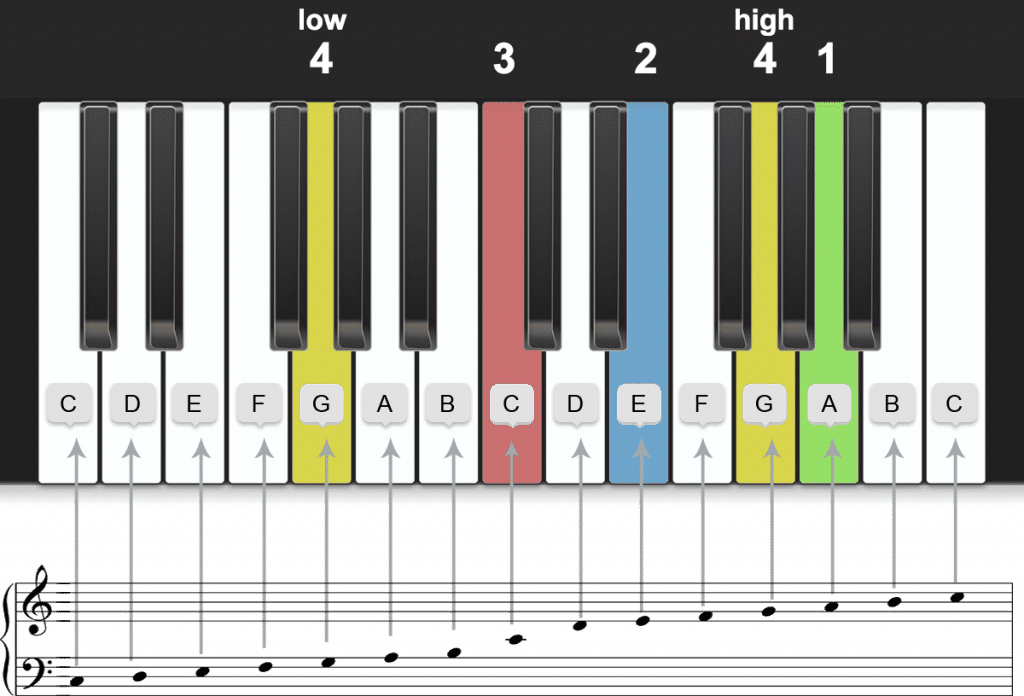
How do you go about tuning a ukulele with a piano? Play the notes G, C, E and A on the piano to match the G, C, E and A strings on the ukulele. If you use a low G tuning, you will need to play the G one octave lower.
You can see the keys of the piano in the diagram, along with the matching string note and string number at the top. Match the notes of the piano to those of your ukulele by ear. Play G, C, E and A on the piano and match each string to that note by ear (for low-G, play the G an octave lower). Getting the hang of this might take some practice.
Can’t get it in tune?
If you have an older ukulele or a brand new one that hasn’t been set up properly, you might find that you can’t seem to get your ukulele in tune at all. You can probably solve this simply by tightening the screws on the tuning heads a little bit.
Still drifting after that? I wrote a whole guide on why a ukulele won’t stay in tune, covering the six usual causes and their fixes.
If your strings buzz when playing, take a look at how to fix that in our ukulele buzz fixing guide.
Another reason may be that the strings haven’t been put on correctly. Take a look at the guide to changing ukulele strings to find out how to do it right.
Ukulele tuning FAQ
What is the standard tuning for a ukulele?
G-C-E-A, often called C tuning. On soprano, concert and tenor ukuleles the G string is usually tuned higher than the C (high-G), which gives the bright, classic ukulele sound.
What is low-G tuning and how is it different?
Low-G tunes the G string an octave lower than standard, written gCEA. It gives a deeper range and a smoother scale, which players like for fingerpicking and melody, at the cost of a little of that classic uke brightness.
How can I tune a ukulele accurately?
The most accurate options are a clip-on tuner or the free UkuTabs online tuner. You can also use a tuning app, or match the strings to a reference pitch like a piano or tuning fork.
Why does my ukulele keep going out of tune?
New strings stretch for the first few days, so frequent retuning is normal. Temperature and humidity changes, loose tuning pegs, and strings not wound securely can also cause it. If it keeps drifting, the won’t-stay-in-tune guide goes deeper.
Are there other tunings besides G-C-E-A?
Yes. D tuning (A-D-F#-B) gives a higher, brighter sound, and baritone ukuleles are tuned D-G-B-E like a guitar’s top four strings. See the different ukulele tunings guide for the full list.
Tuned up? Go play
Once you are in tune, keep the free ukulele tuner bookmarked and try an easy song or two. If your uke will not hold its tune, the won’t-stay-in-tune guide covers why.
Some links on this page are Amazon affiliate links. As an Amazon Associate, UkuTabs earns from qualifying purchases at no extra cost to you.
hiiiiiiiiiiii
hi
to get to the tuner on the left side of your screen the next to the bottom picture will say online tuner and then just klick on to that
If I join ukutabs can I print out the the lyrics and chords?
hi
Just started playing and having trouble with the tuning, I have w ukuleles, one old one that’s hopefuly in proper tune (gcea) and I’m using it as reference to tune my tiny, new (unfortunately hand made) ukulele that I stringed myself following a tutorial. Hasn’t worked so far and really far off, may be a problem in the stringing. Any advice?
How do I play the Ukulele if I am right handed
Con que cuerdas, que no sean de Uke Baritono se puede lograr una afinación gCEA o GCEA?
No consigo las cuerdas correctas. Con las cuerdas de la guitarra logro una buena afinación en uke tenor y concierto, pero no en Baritono, ya que se rompe o el uke o la 1era.?
How do you get to the tunner
It’s not teaching me anything