
Bbm              Gb
Once, once upon a time,
                   Db
thought that you'd be mine,
     Ab               (Fm)
but then you let your colours shine.


Bbm              Gb
I, I wanted to believe,
                      Db
that you were right for me,
     Ab              (Fm)
well how could I be so naive?


Gb         Db                Ab
Now we're broken forget me not,
Gb                Ab         Fm
I'm falling down and I can't stop...


Bbm
Lets go down to the apple tree
Gb                      Db      Ab
as naive as Adam & Eve, woah, woah...
Bbm
Lets go down to the apple tree
Gb                        Db     Ab
fighting against gravity, woah, woah...
          Bbm      Gb    Ab     Fm    Bbm
falling too deep, so can you catch me?


Bbm                      Gb
Twice, twice I caught you out,
                Db
my head was in the clouds,
Ab                                   Bbm
before I woke up and came around to see


Bbm
You play stupid games,
Gb
temptation in your way,
Db                          Ab
cause I went so fast from love to hate


Gb                 Db              Ab
Now we're broken, was this your plan?
Gb                    Ab           Fm
I'm falling down and I don't understand...


Bbm
Lets go down to the apple tree
Gb                      Db      Ab
as naive as Adam & Eve, woah, woah...
Bbm
Lets go down to the apple tree
Gb                        Db     Ab
fighting against gravity, woah, woah...
          Bbm      Gb    Ab     Fm    Bbm
falling too deep, so can you catch me?


Bbm
You keep playing, you keep playing
Gb
I keep praying, I keep praying
Db                Ab
that it could be us...
Bbm
You keep playing, you keep playing
Gb
I keep saying, I keep saying
Db                        Ab
that it should have been us...


Bbm
Lets go down to the apple tree
Gb                      Db      Ab
as naive as Adam & Eve, woah, woah...
Bbm
Lets go down to the apple tree
Gb                        Db     Ab
fighting against gravity, woah, woah...
          Bbm      Gb    Ab     Fm   Bbm
falling too deep, so can you catch me?


falling too deep, can you catch me?
falling too deep, can you catch me?
falling too deep, can you catch me?
falling too deep...
 Cet arrangement est l'interprétation personnelle de son contributeur, partagée pour l'étude privée, l'éducation et un usage non commercial. La chanson, les paroles et la musique sous-jacentes restent la propriété de leurs détenteurs de droits. Pour demander un retrait, consulte Mentions légales.
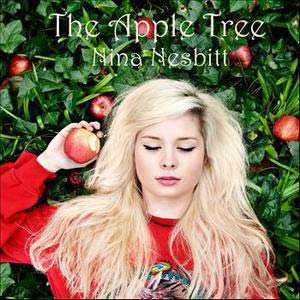
Accords de Apple Tree par Nina Nesbitt
Rythmique suggéréecroches bas-haut
1
d
2
u
3
d
4
u
Fonctionne aussi : rythmique des îles d – d u – u d u
Comment jouer Apple Tree à l'ukulélé
Essaie le croches bas-haut comme point de départ : d u d u. Tu la joues en Bb mineur. Les accords demandent un peu plus, donc je les note confirmé. Tu préfères des formes plus faciles ? Transpose la chanson 1 demi-ton plus bas, puis un capodastre à la frette 1 te ramène à la tonalité de cette page.
5 accords d'ukulélé utilisé dans "Apple Tree" de Nina Nesbitt: Bbm, Db, Fm, Gb et Ab
Qu'as-tu pensé de cet arrangement ?
Ta note aide d'autres joueurs à trouver les meilleurs arrangements




An apple is a round, edible fruit produced by an apple tree (Malus domestica). Apple trees are cultivated worldwide and are the most widely grown species in the genus Malus. The tree originated in Central Asia, where its wild ancestor, Malus sieversii, is still found. Apples have been grown for thousands of years in Asia and Europe and were introduced to North America by European colonists. Apples have religious and mythological significance in many cultures, including Norse, Greek, and European Christian tradition.
Apples grown from seed tend to be very different from those of their parents, and the resultant fruit frequently lacks desired characteristics. For commercial purposes, including botanical evaluation, apple cultivars are propagated by clonal grafting onto rootstocks. Apple trees grown without rootstocks tend to be larger and much slower to fruit after planting. Rootstocks are used to control the speed of growth and the size of the resulting tree, allowing for easier harvesting.
There are more than 7,500 cultivars of apples.[citation needed] Different cultivars are bred for various tastes and uses, including cooking, eating raw, and cider or apple juice production. Trees and fruit are prone to fungal, bacterial, and pest problems, which can be controlled by a number of organic and non-organic means. In 2010, the fruit’s genome was sequenced as part of research on disease control and selective breeding in apple production.
◉‿◉